Farm Robotics Challenge 2023
Our team received the Elegance in Design Prize at the first Farm Robotics Challenge, hosted by the AI Institute for Next Generation Food Systems (AIFS), farm-ng, and UC ANR, for Robo-ag, a robot that sprays pesticide only where it is needed.
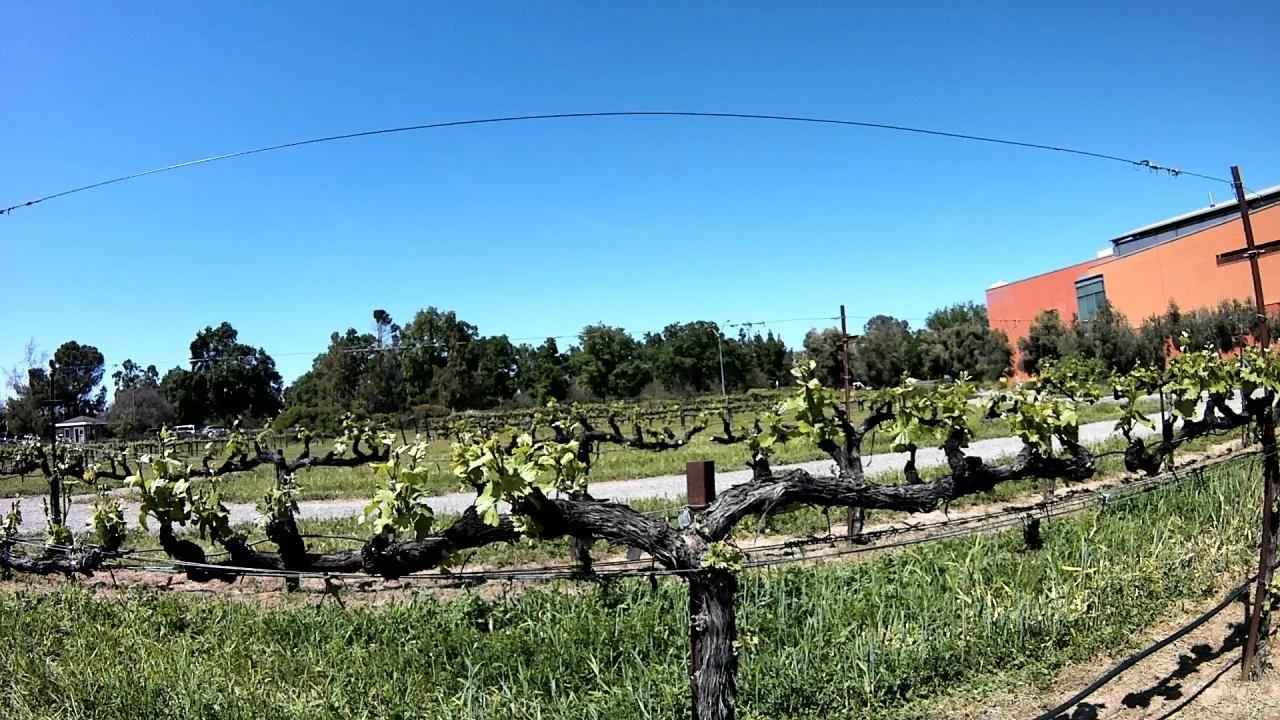
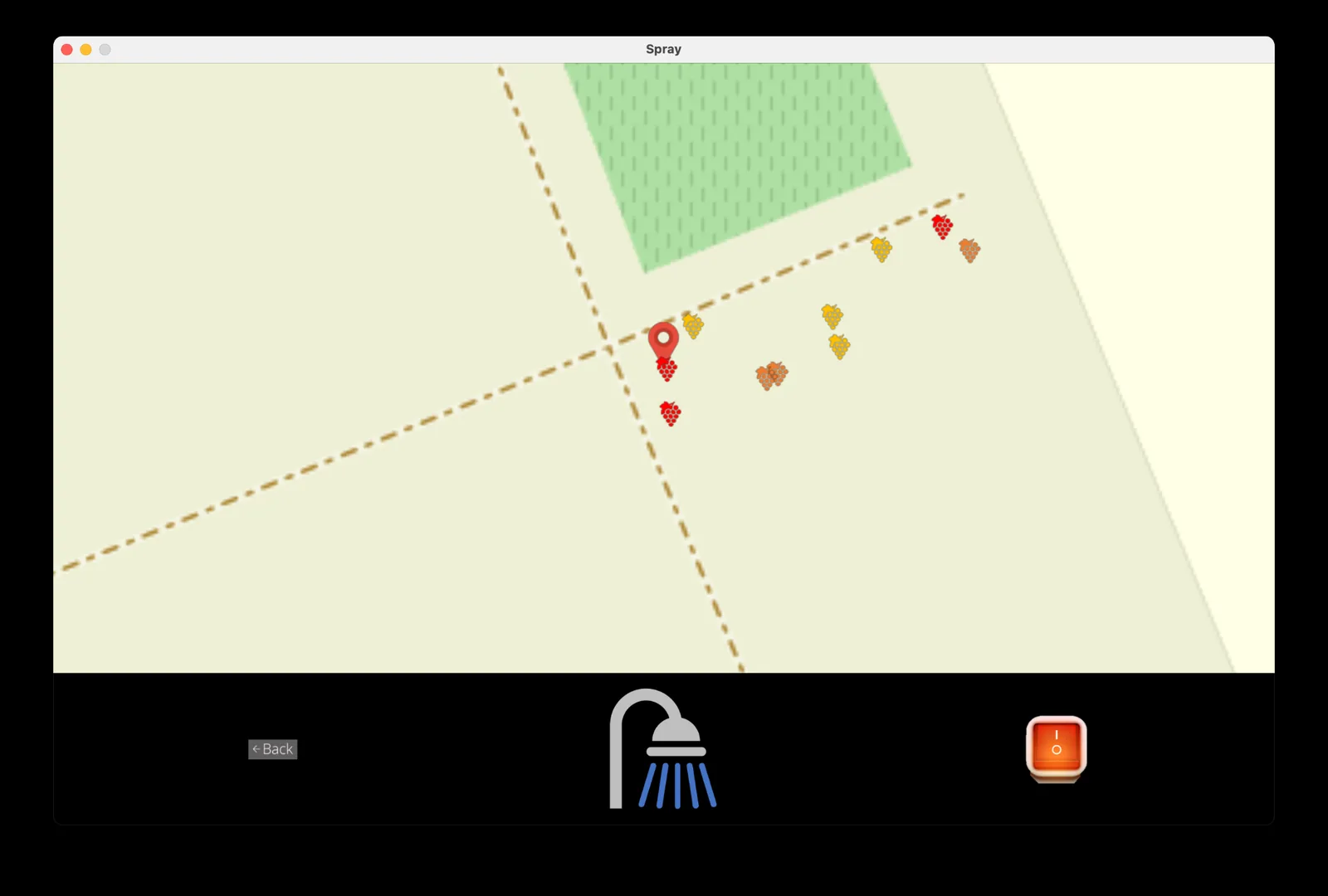
Blanket spraying wastes about 70 million pounds of pesticide active ingredients a year in the U.S. and causes about $1.4 billion in losses from incorrect application, along with eutrophication, algal blooms, and soil acidification. Our test case was a 10-acre vineyard in Napa County, where we wanted to spray only at selected vines.
Targeted spray system
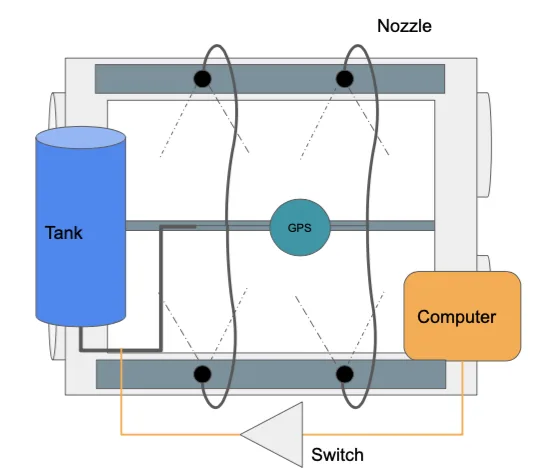
We built the spray applicator on the farm-ng Amiga. The robot follows vineyard rows with GPS and a line-following algorithm. A self-pressurizing tank feeds solenoid nozzles that open only at defined points. Weather shields and automatic checks of GPS, pressure, and battery keep it from running in a bad state.
How it works
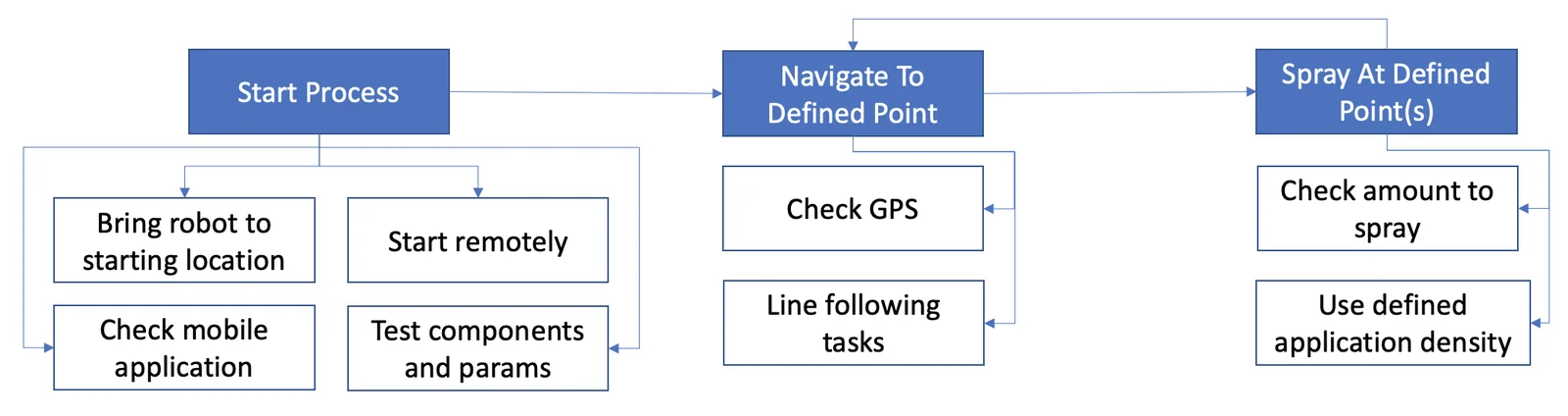
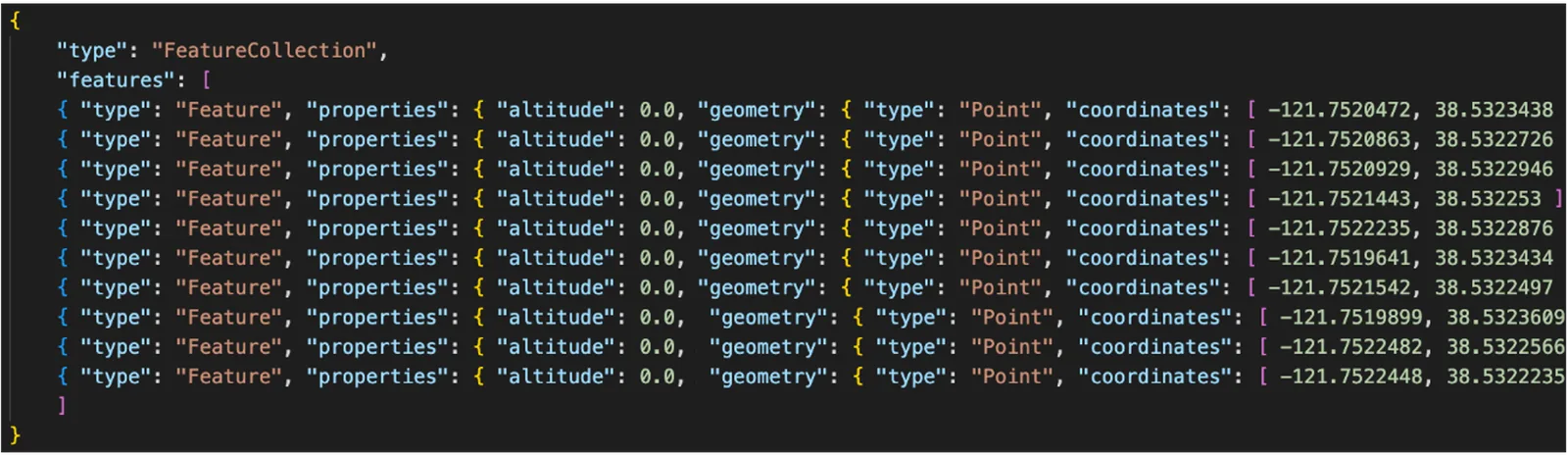
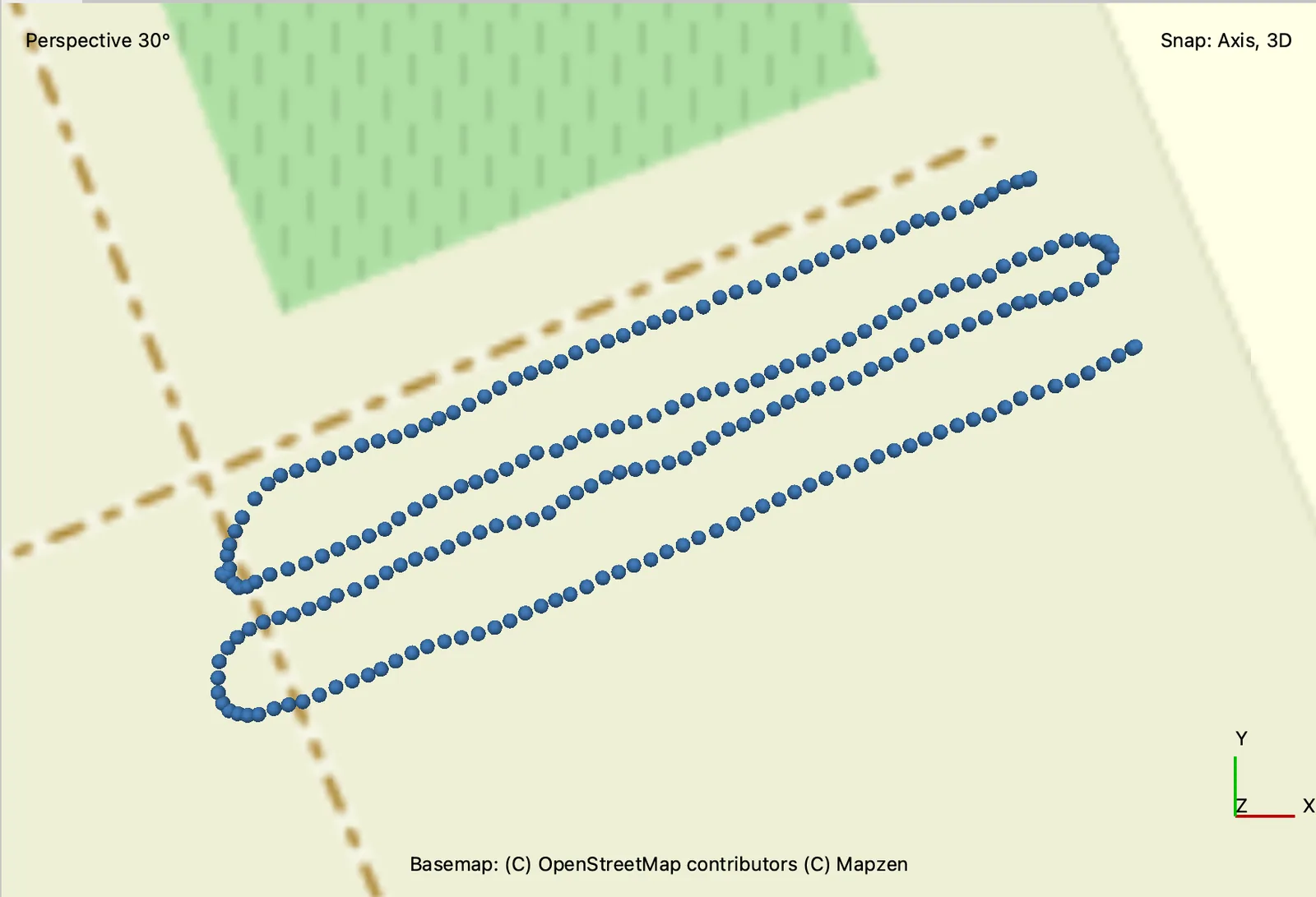
A run starts remotely and checks each subsystem. The Amiga then drives along the row using GPS and line following, and compares its position with a JSON application map to decide when to open the nozzles.
GPS navigation and spray maps
The application map is a GeoJSON file of spray points. The robot compares its current position with these points.
Targeted spraying could cut herbicide and fertilizer use by up to 90% in many cases and reduce the labor needed for scouting and application.