Measuring Forest Evapotranspiration: From Leaf Weight to Water Flux
I built this system at Seoul National University in 2015–2017, and it was published in Precision Agriculture Science and Technology (2020).
The system weighs a 1 m × 1 m tray of dead leaves on the forest floor and logs the change in weight over time. The original goal was to monitor fuel moisture content (FMC), which matters for wildfire risk.
The tray was installed near an eddy covariance tower. The load cells measured water entering and leaving the leaf litter through rain and drying, while the tower measured exchanges with the atmosphere above the stand. Read together, the two give a view of evapotranspiration (ET) from the forest floor as part of the stand’s total water flux.
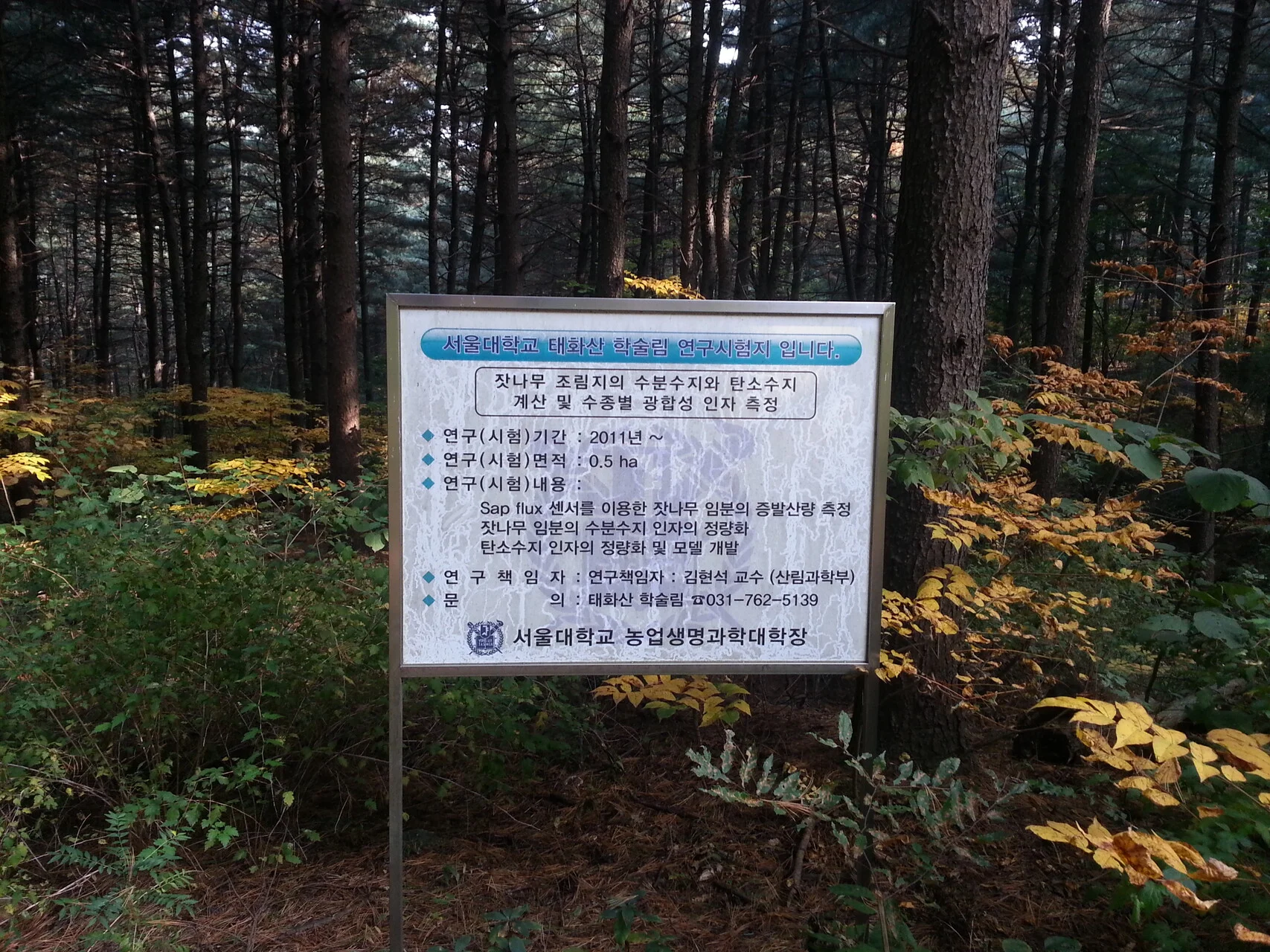
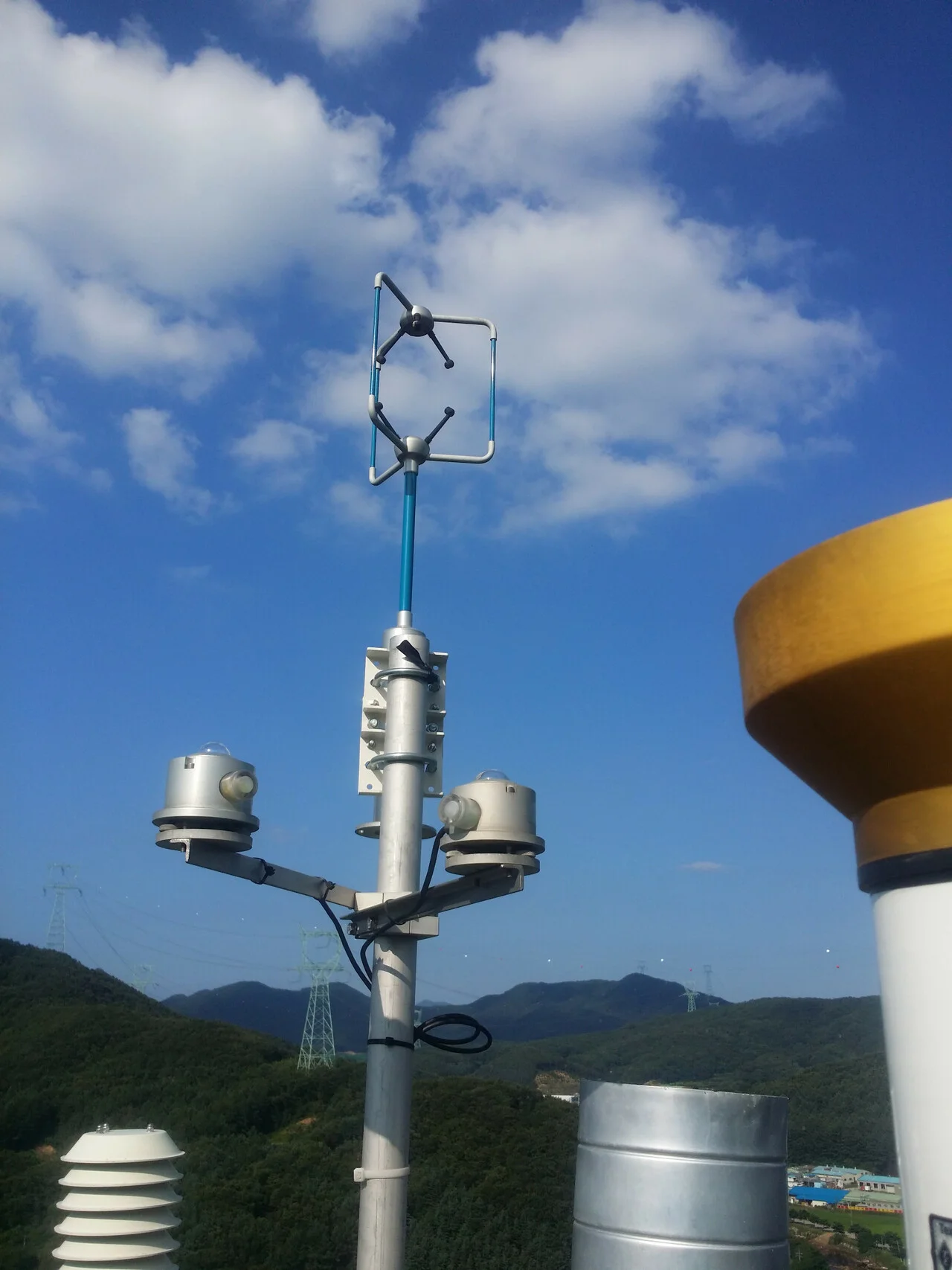
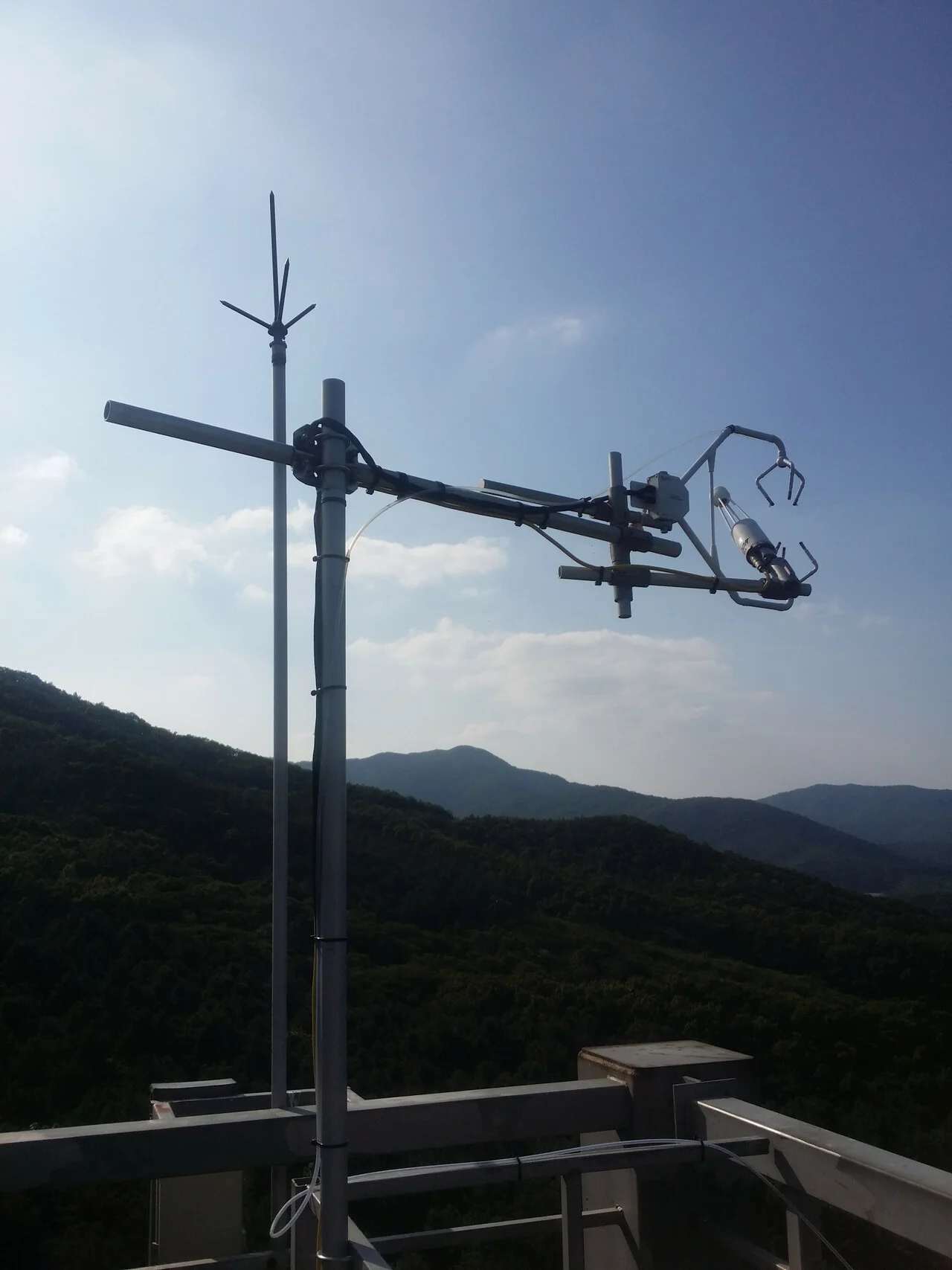
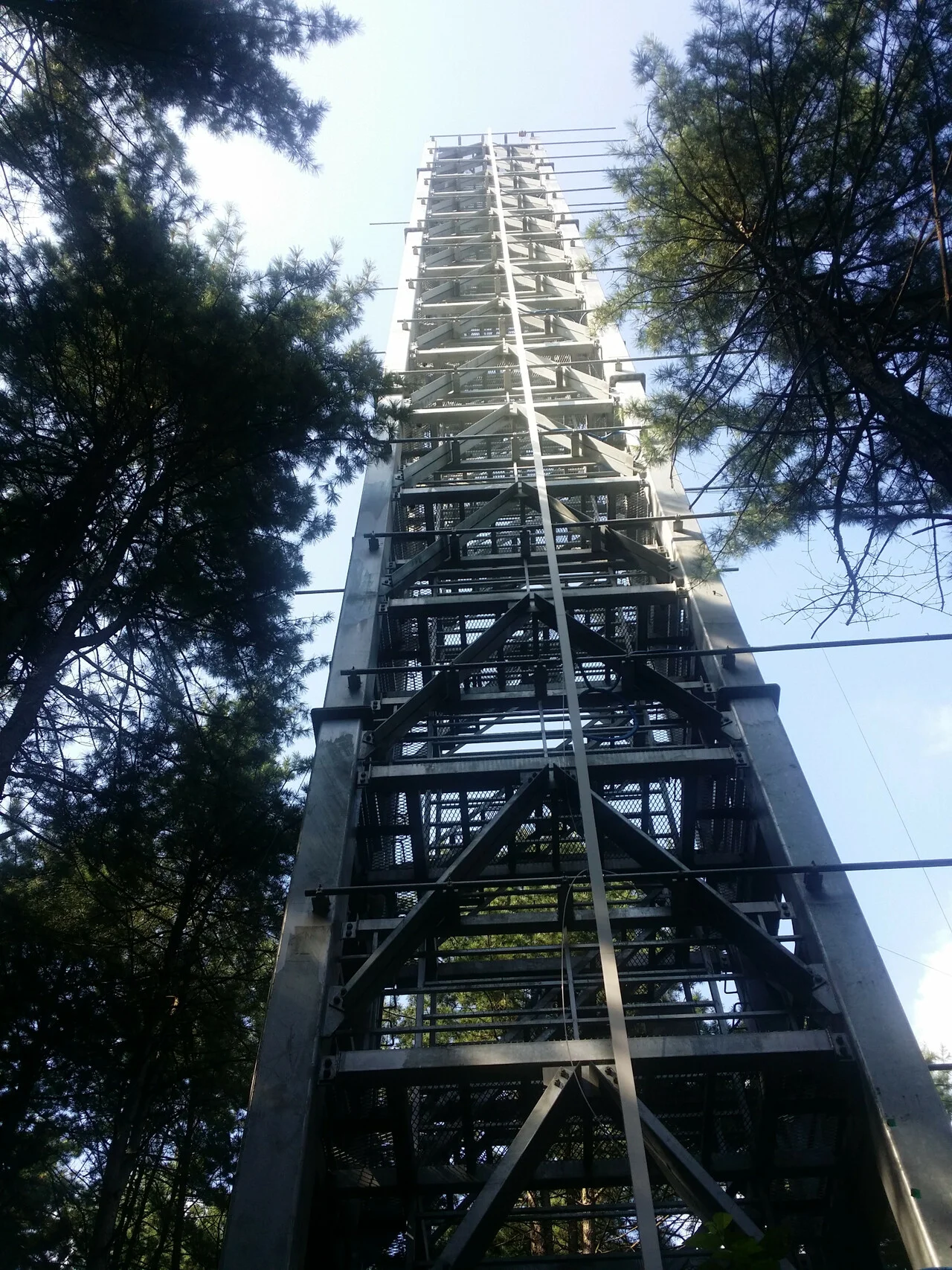
Hardware
The system was built to log continuously outdoors. Load cells track the mass of a 1 m × 1 m aluminum container filled with leaf litter.
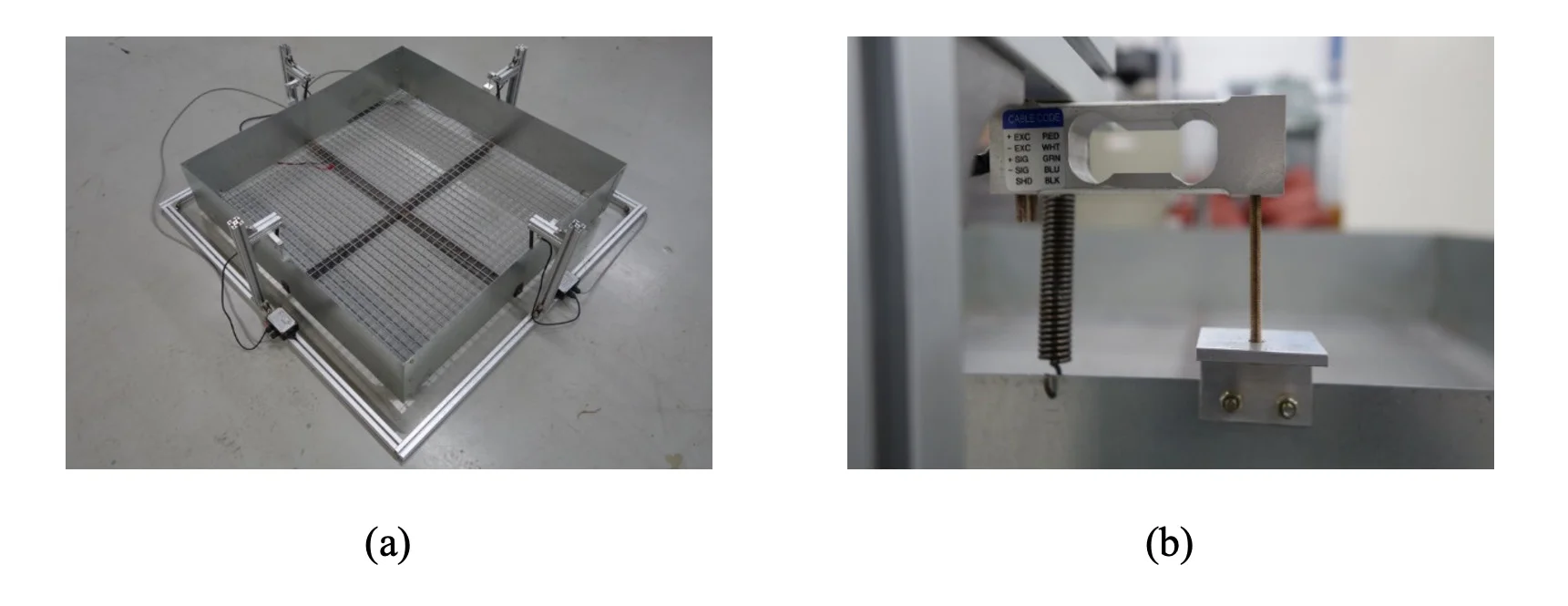
- Four 5 kgf-class load cells (BCL-5L, CAS, Korea) supporting the platform
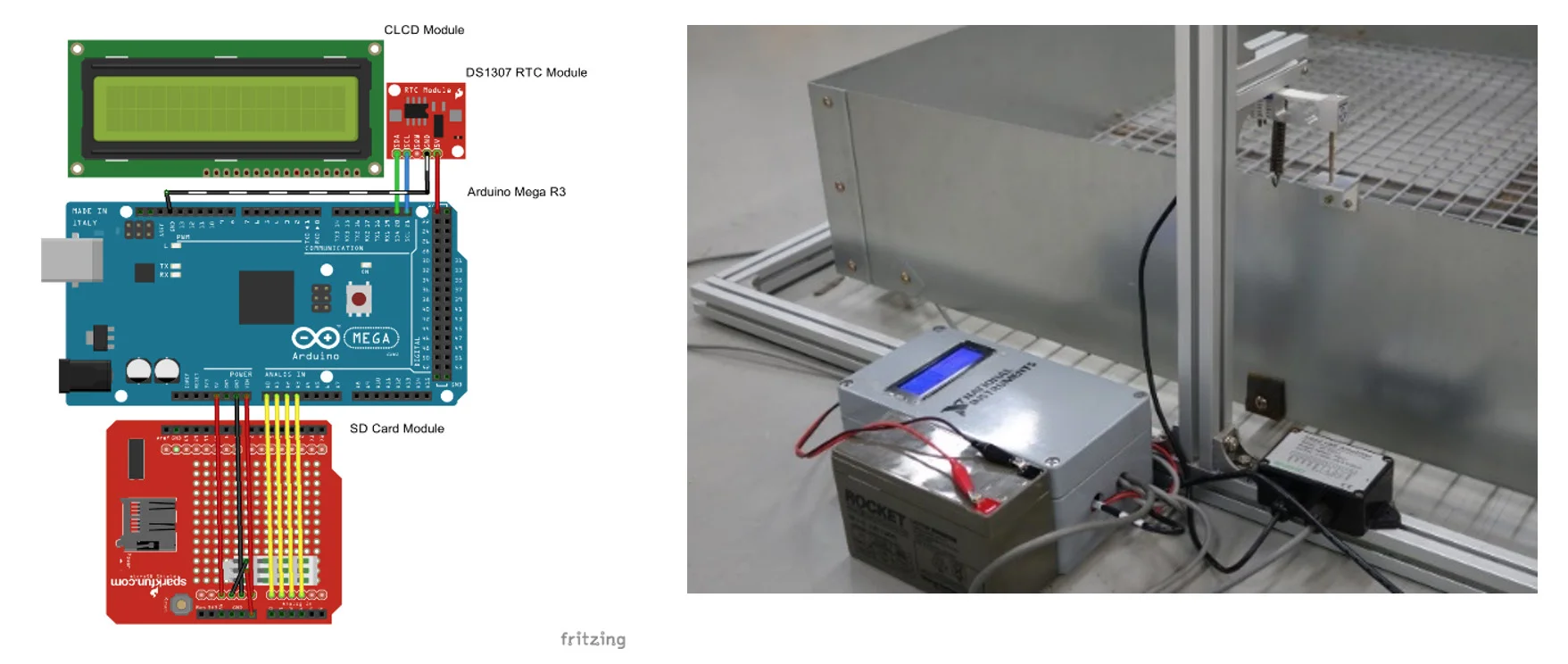
- An Arduino Mega R3 board
- 16-bit analog-to-digital conversion to resolve small weight changes
- An SD card module and a real-time clock (RTC) for timestamped logging
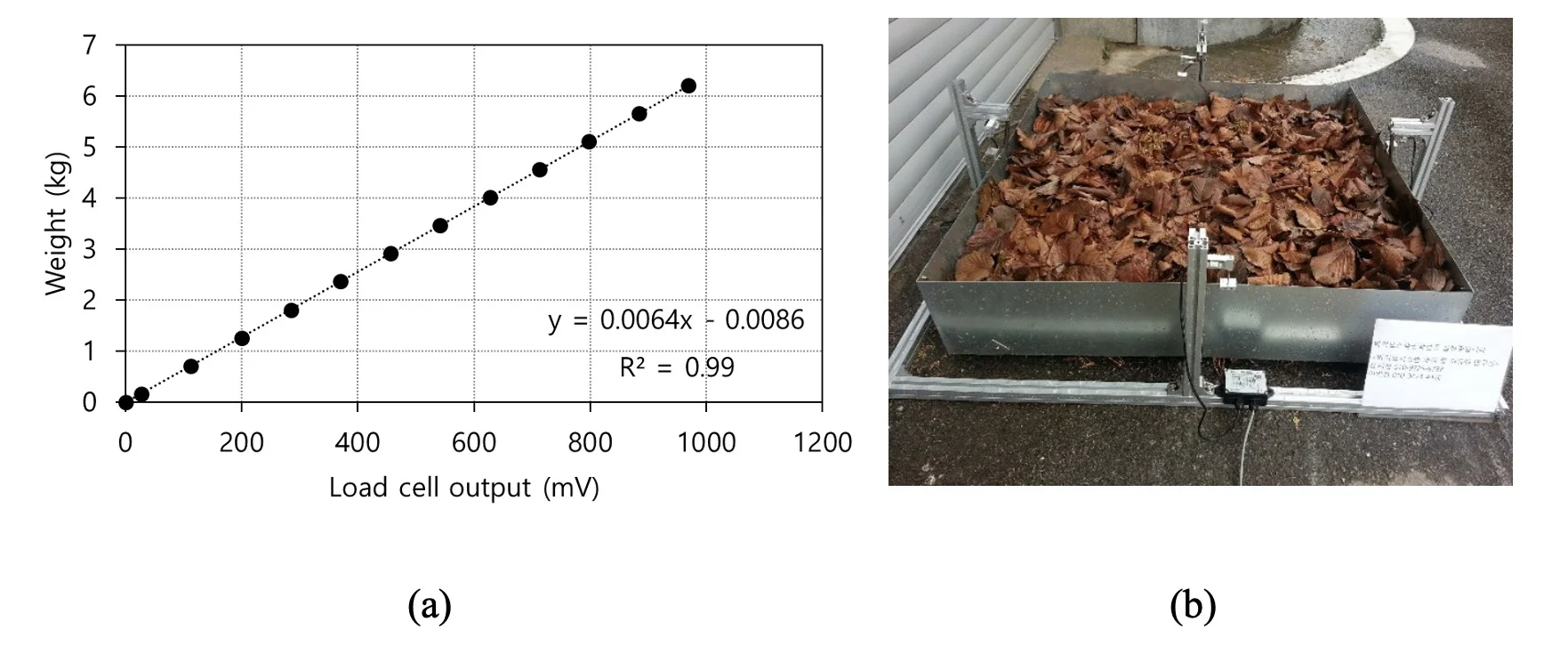
Field results
The system was deployed in an experimental forest to see how leaf weight changes with the weather. The clearest pattern shows up when leaf weight is compared with rainfall.
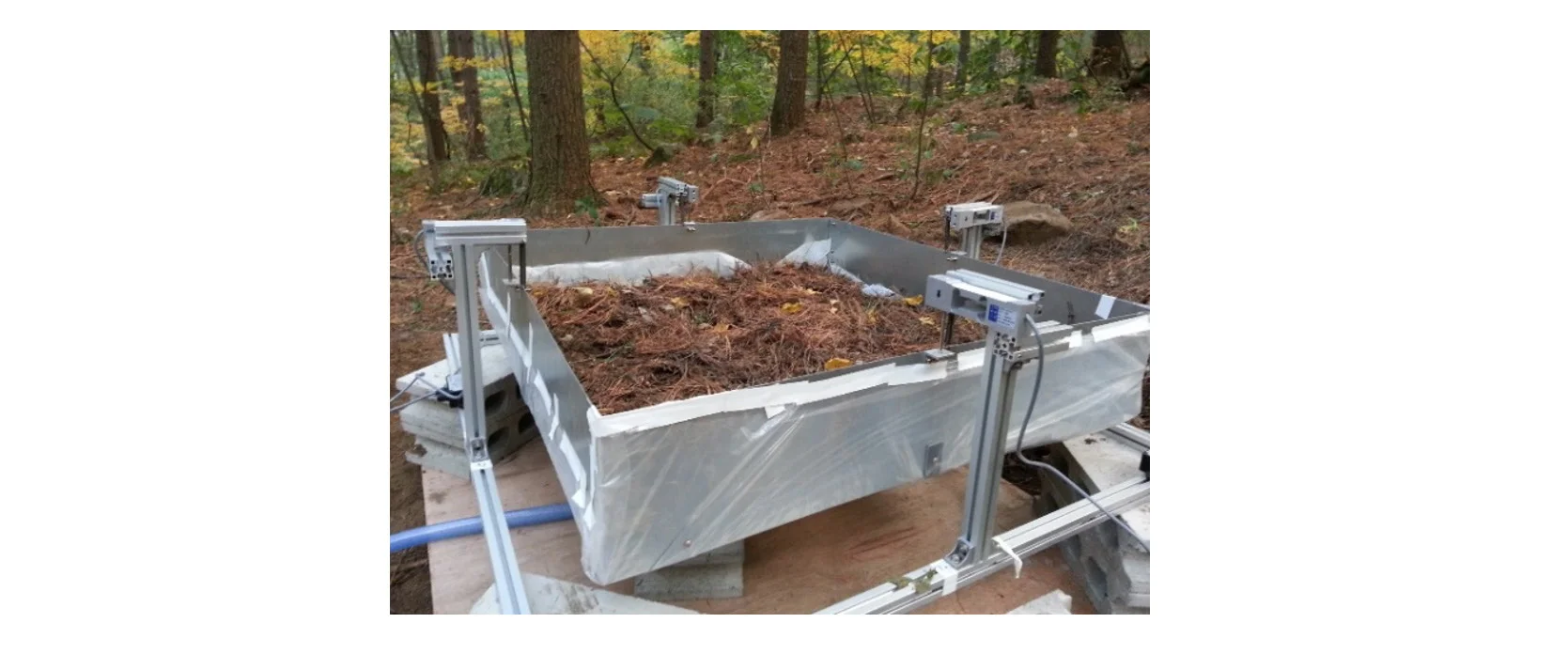
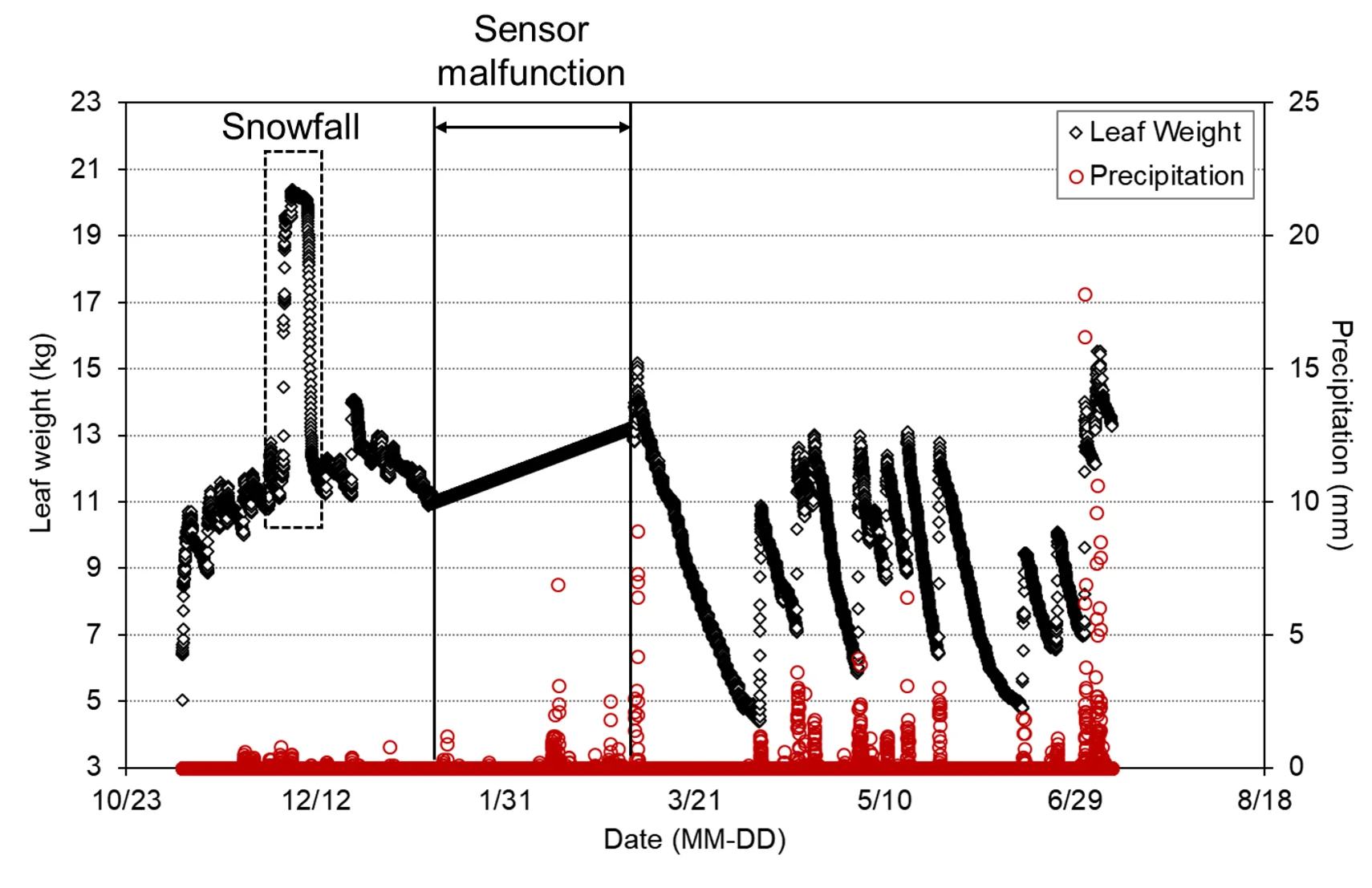
The weight of the dead leaves rises sharply during rain and then follows a drying curve. Measuring this drying rate next to an eddy covariance tower shows how much the forest floor contributes to total evapotranspiration, which is used in both climate modeling and forest fire prevention.