Build Drones Part 1: DJI F550 Assembly and My Previous Research
Why the DJI F550
I started my custom drone build with the DJI Flame Wheel F550 hexacopter because I had used the same airframe before, in my research on the Use of Unmanned Aerial Vehicle for Multi-temporal Monitoring of Soybean Vegetation Fraction. It had been stable and reliable for agricultural remote sensing in that project, so it was a sensible baseline.
Hardware
Parts list for this hexacopter build:
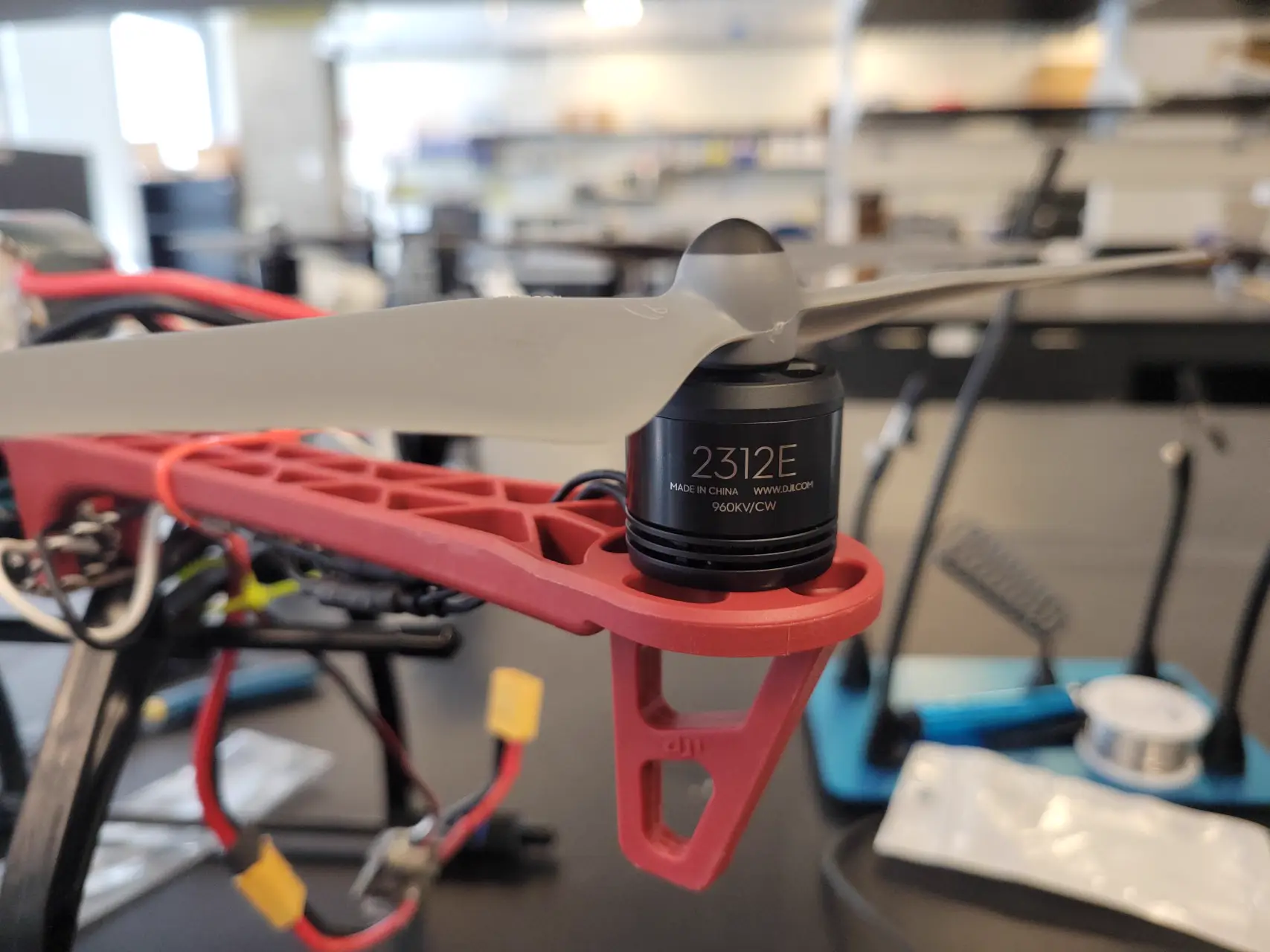
- Frame and propulsion: DJI Flame Wheel F550 ARF Kit v5. The kit includes the DJI E305 propulsion system (2312E 800KV CCW motors and 30A ESCs) with 9.4x5.0 inch propellers. Each motor can produce up to 850g of thrust on a 4S LiPo.
- Flight controller: Pixhawk PX4 PIX 2.4.8 Flight Controller Set (includes GPS and 3DR Radio Telemetry).
- Remote controller: Flysky FS-i6X 6CH 2.4GHz RC Transmitter with an FS-iA6B Receiver, paired with an FS-CVT01 voltage collection module to monitor battery voltage in flight.
- Battery: Zeee 4S 6200mAh LiPo Battery (and later a custom 21700 4S2P Li-ion pack).
Assembly
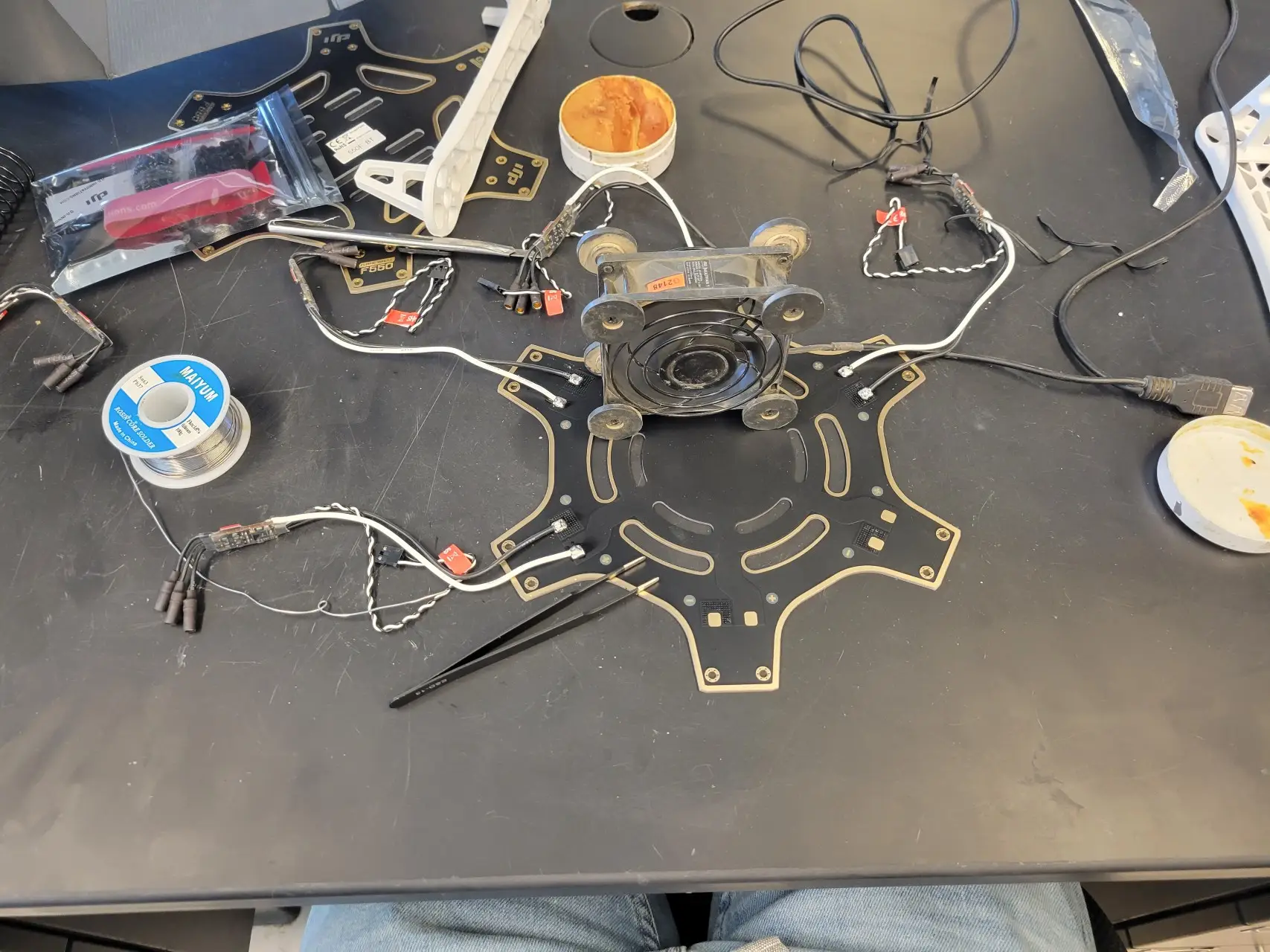
Soldering the power distribution board
The F550 has a power distribution board built into its bottom plate. I soldered the ESCs (Electronic Speed Controllers) and battery connectors to it.
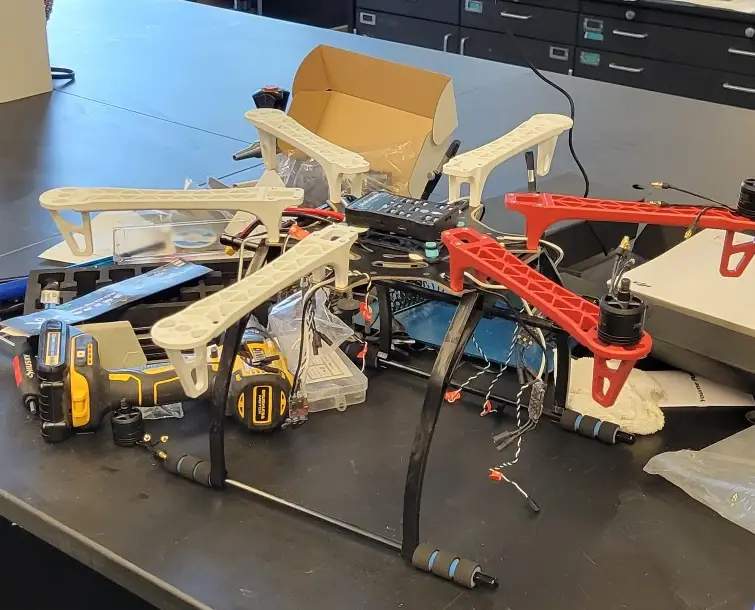
Frame and transmitter
Then I assembled the arms and mounted the motors.
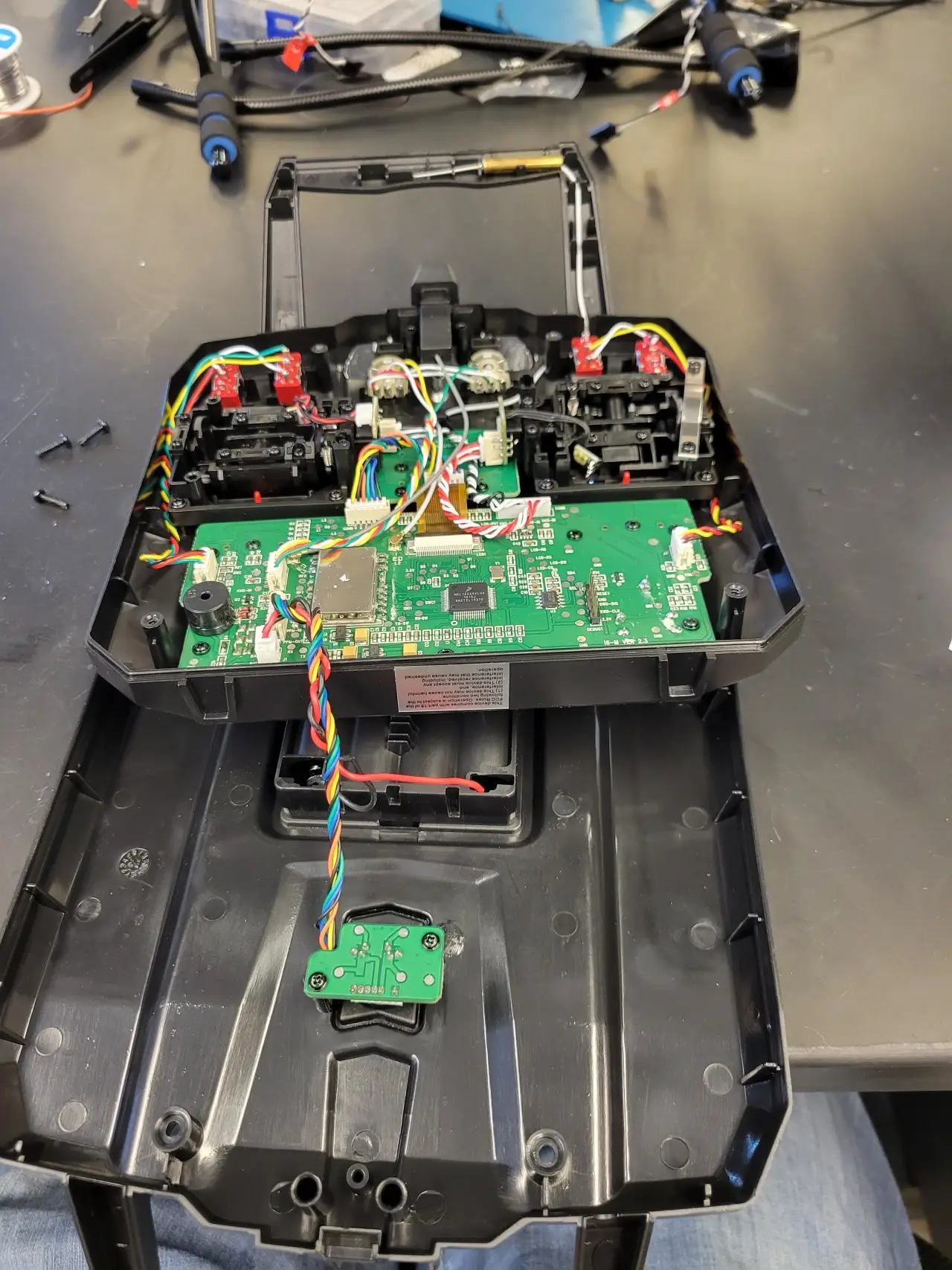
I also switched my radio controller from Mode 1 to Mode 2, which is how I prefer to fly.
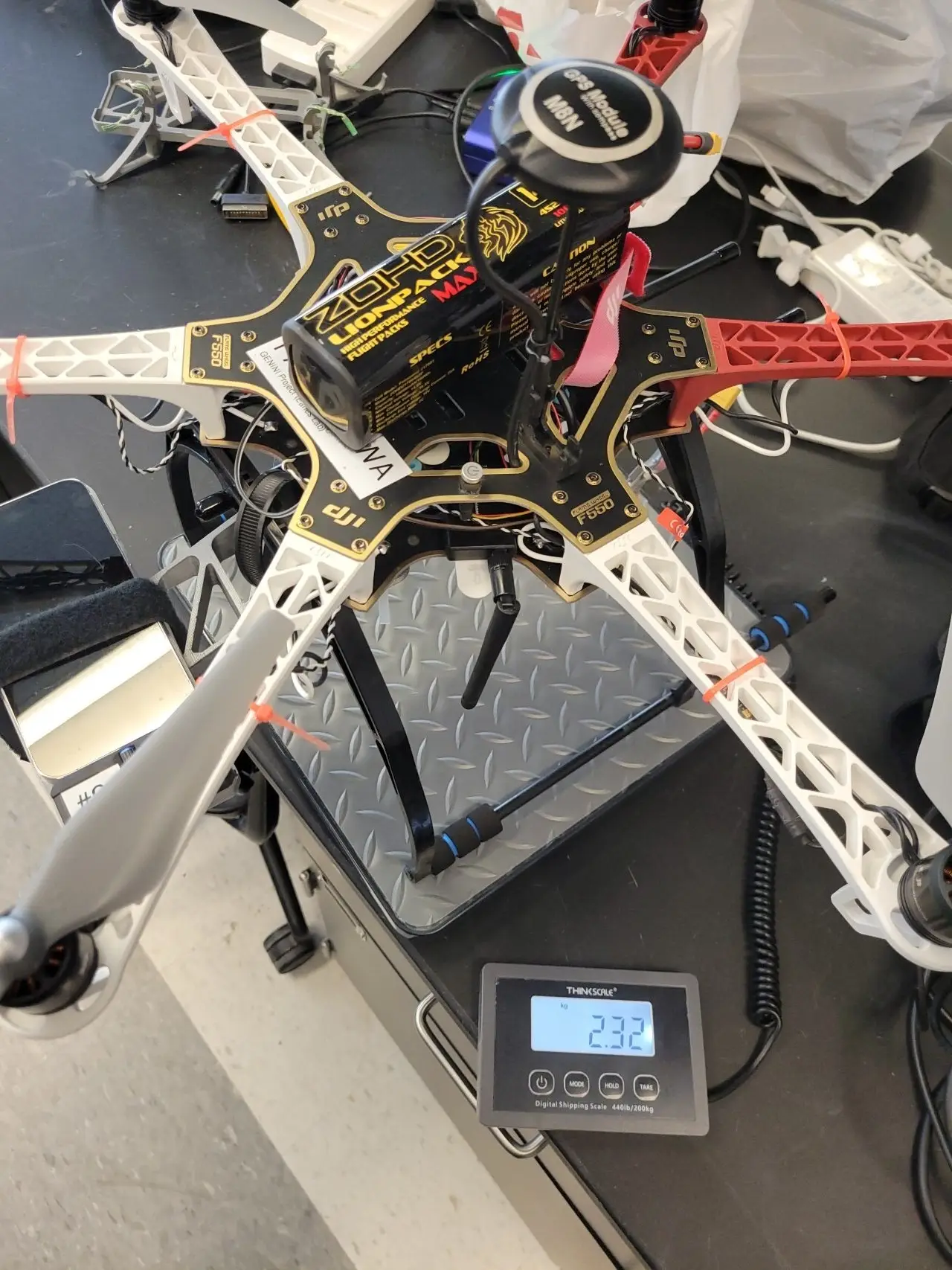
The full weight of the drone:
Flight time estimation with eCalc
Before flying, I estimated the battery margin from the average current draw and the system weight. I ran eCalc with 2400g AUW, a 4S battery, 800KV motors, and 9.4x5.0 props to get the theoretical hover limits.
The flight time calculation works like this. Suppose the drone uses a 4S pack rated at 10,000 mAh (like the custom 21700 4S2P pack) and draws an average of 25 amps in flight.
- Battery rating = 10,000 mAh
- Convert to amp-minutes: $(10,000 / 1,000) \times 60 = 600 \text{ amp-minutes}$.
- Current draw = 25 amps.
- Maximum flight time = $600 / 25 = 24 \text{ minutes}$.
- Leave a safety margin. The 90% rule says to land when 90% of the capacity is used, to prevent cell damage. The recommended safe flight time is usually calculated with a 40% to 70% safety factor, which gives about 10 to 17 minutes.
Reference: LSU AgCenter Drones
Test flights and tuning
October 25, 2023: first hover test
The first flight went smoothly. I checked hover stability, motor spin directions, and that the flight controller responded properly.
AutoTune
I used ArduPilot’s AutoTune to tune the PID gains. With the drone in AltHold mode, I flipped the AutoTune switch and the Pixhawk twitched the drone on the roll and pitch axes, then computed the PID parameters for this 2400g frame. The wobbles were much smaller afterwards.
October 31, 2023: endurance and current draw
A few days later I flew a longer test to check real battery endurance. The F550 hovered at around 15A to 20A continuous, about 295 mAh per minute on average. With that draw and a safe landing voltage of 14.0V under load (3.5V per cell) on the 4S pack, the maximum safe flight time came out at only about 10 to 15 minutes.
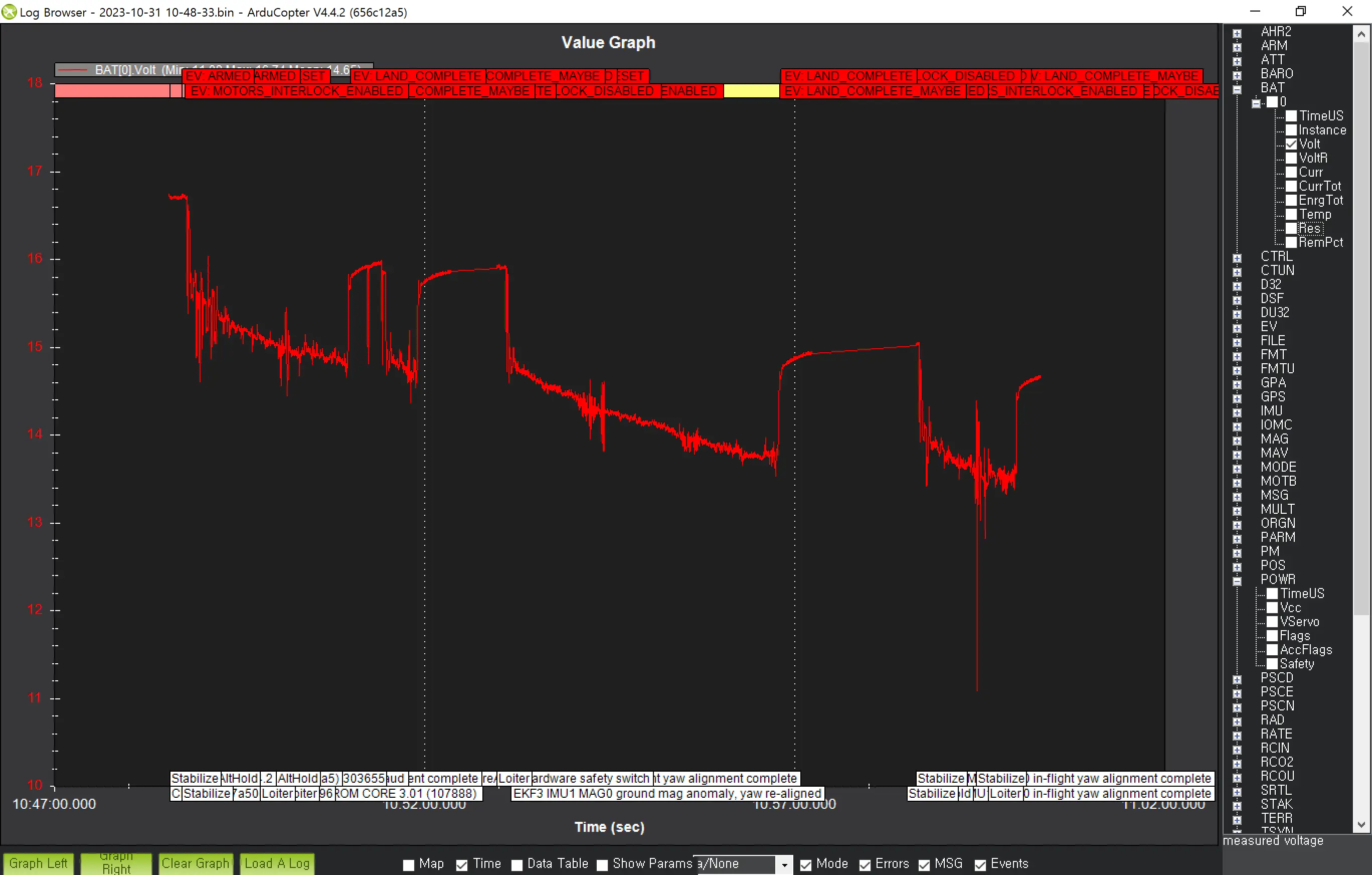
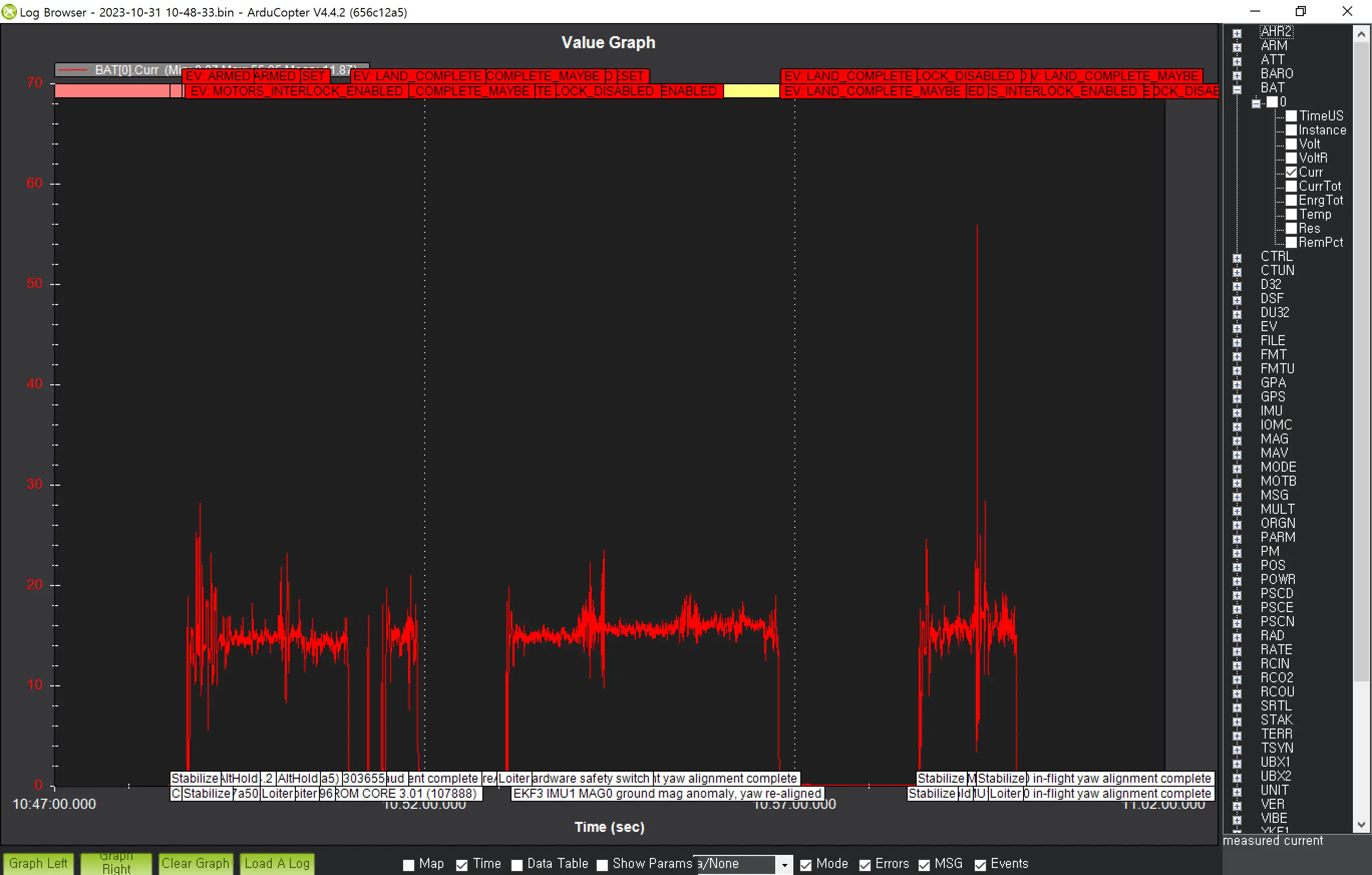
The battery capacity dropped quickly during this flight. We also got a pre-flight “Battery fault” error, caused by voltage sag under heavy load:

The F550 flew stably and the AutoTune worked, but 15 minutes at most was not enough for longer tests with heavier payloads. I needed an airframe with lower KV motors, larger props, and more battery capacity, which led me to the Tarot 650 Sport.