Build Drones: Upgrading Airframes - DJI F550 vs Tarot 650
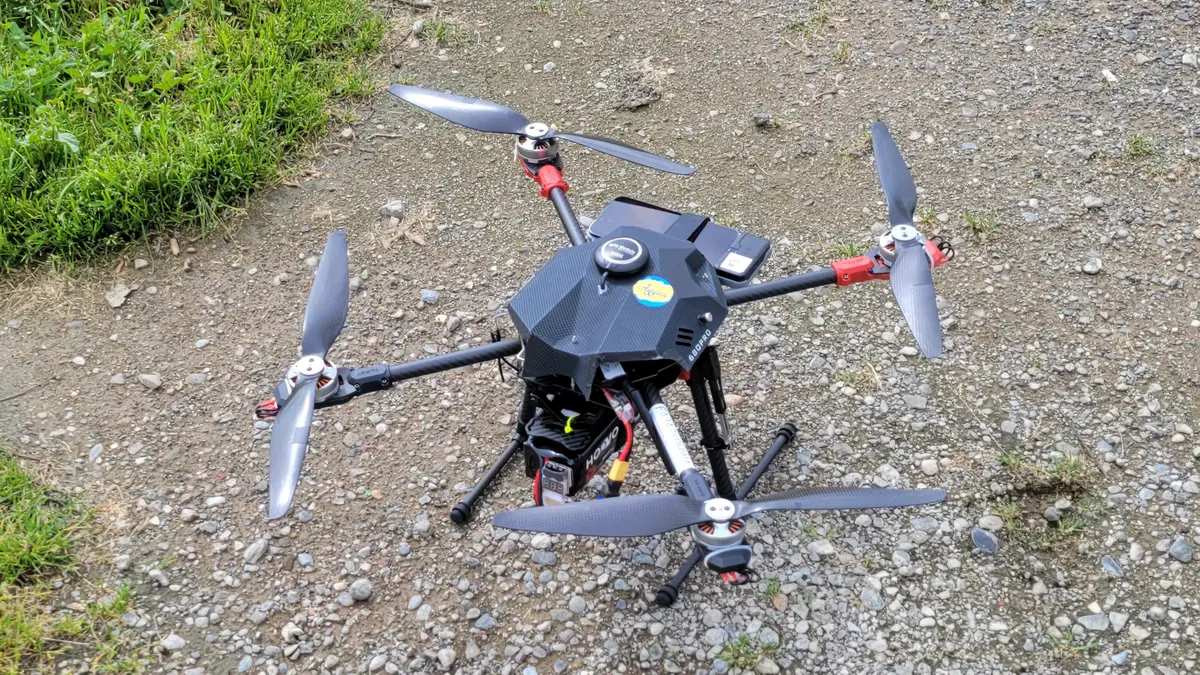
In Part 1, I started with the DJI F550 because I had used it in my earlier remote sensing research. With my new payloads it could only fly about 10 to 15 minutes safely, so I needed a more efficient platform with bigger propellers and lower KV motors for longer tests and heavier sensors. I compared the F550 with the Tarot 650 Sport.
DJI F550 vs Tarot 650
Limits of the F550
The F550 maxed out at roughly 15 minutes of flight. The battery drained quickly even with light payloads like a phone mount, so LiDAR or heavier cameras were not feasible. I considered testing with a phone mount, but the mount would have needed a redesign, and that would not have solved the power limit.
The Tarot 650 Sport
The F550 uses six smaller motors (hexacopter); the Tarot 650 uses four much larger motors (quadcopter). Turning 15-inch folding propellers instead of 9.4-inch rigid ones makes the whole system more efficient.
I chose the Sport version (TL65S01) over the older Iron Man series (TL65B01). Its landing gear is motorized and retracts in flight, which keeps the skids out of the view of 360° cameras or rotating LiDAR. The carbon fiber arms and propellers fold, so the 650mm frame packs small for transport. It also takes the Tarot 680PRO canopy to protect the electronics, and it is designed around 22.2V (6S) batteries rather than the usual 4S.
Theoretical specifications:
- Max flight time: ~40 mins (with a 22,000 mAh battery; 25–30 min with a standard 10,000 mAh 6S).
- Optimal payload: 1130g (max payload 1500g, depending on battery weight).
- Max yaw velocity: 200°/s.
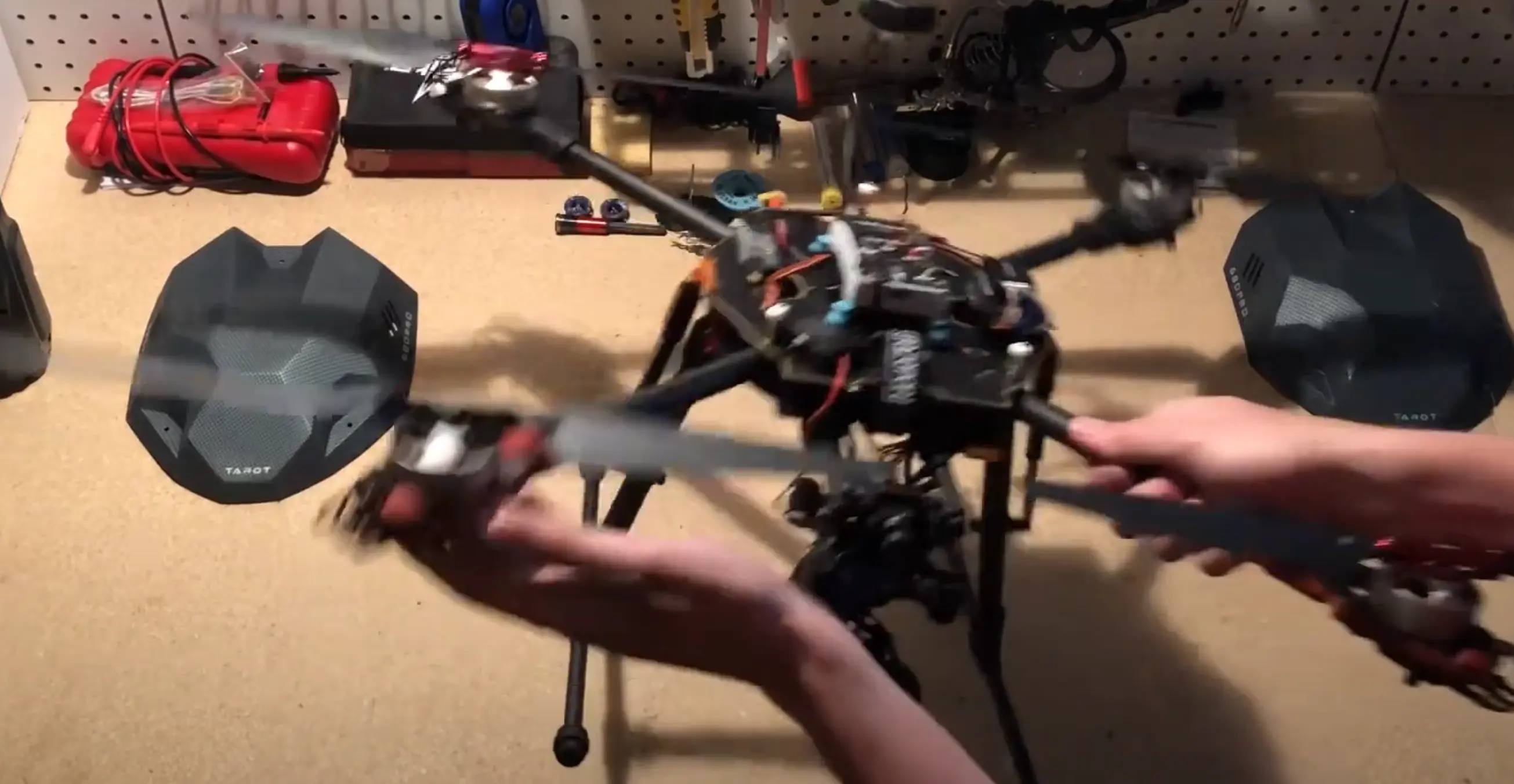
The community build above shows the carbon fiber structure and the 15-inch folding propellers.
4S or 6S
A common question in custom builds is whether to use a 4S or 6S battery. A 6S battery gives more RPM per KV at lower current, so the motors work less hard and standard wire gauges are fine. A 4S system can still fly up to 30 minutes with the right low KV motor, for example 500-600KV motors on 15” or 16” props.
Since I need to carry a heavier payload and eventually fly for 25+ minutes, lower KV motors (under 400KV) with larger 15” to 17” propellers give better efficiency (grams of thrust per watt). In one community test, an AUW 2.8kg, 650 Iron Man frame, 400KV motors, 14” props, 8000mAh 6S setup flew 20–22 minutes mixed.
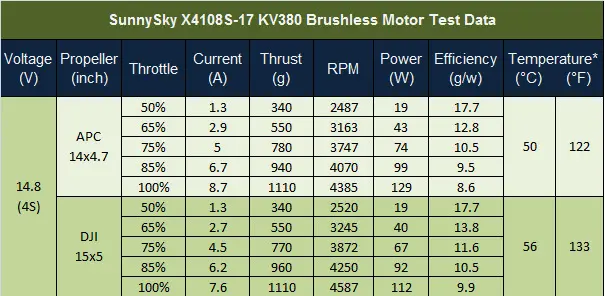
I decided to move the flight controller and essentials from the F550 to a Tarot 650 Sport. Before buying parts, I simulated motor efficiency and flight time in eCalc.