Build a Weather Station Part 4: Radiation Shield and Outdoor Validation
I mentored Lars Lundqvist, then an undergraduate researcher in computer engineering, on this part of the project. He verified the station hardware and ran the outdoor shield tests with me.
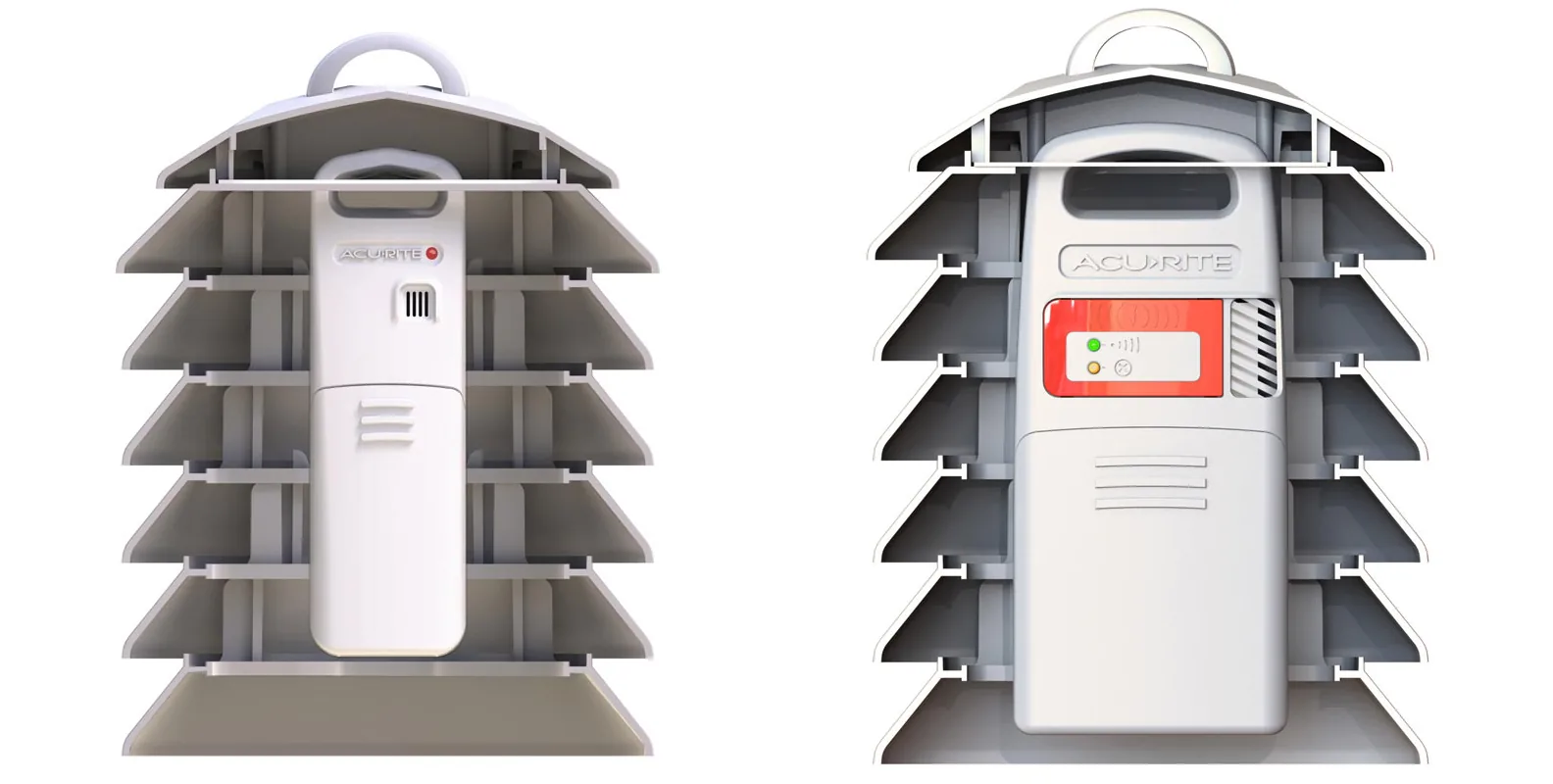
Radiation shield
- A DHT22 in direct sun reads high. The shield blocks direct and indirect radiation and keeps rain and fog off the sensor.
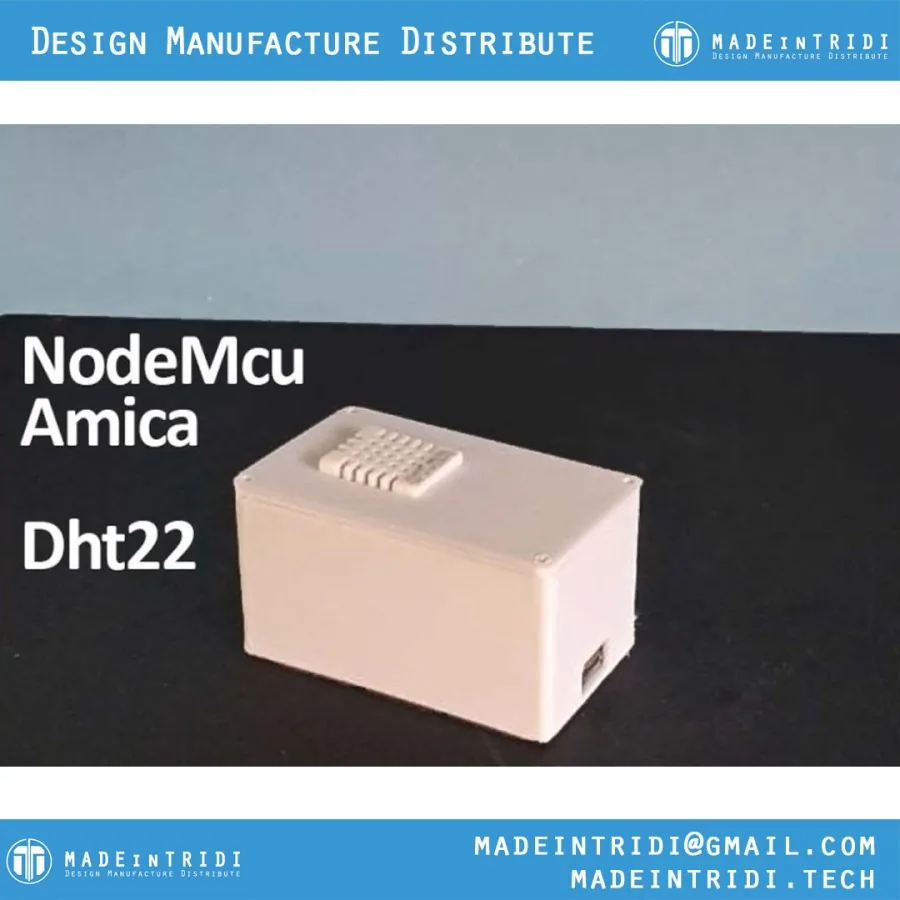
- Reference designs: Stevenson screen, printed DHT22 cases.
Second unit
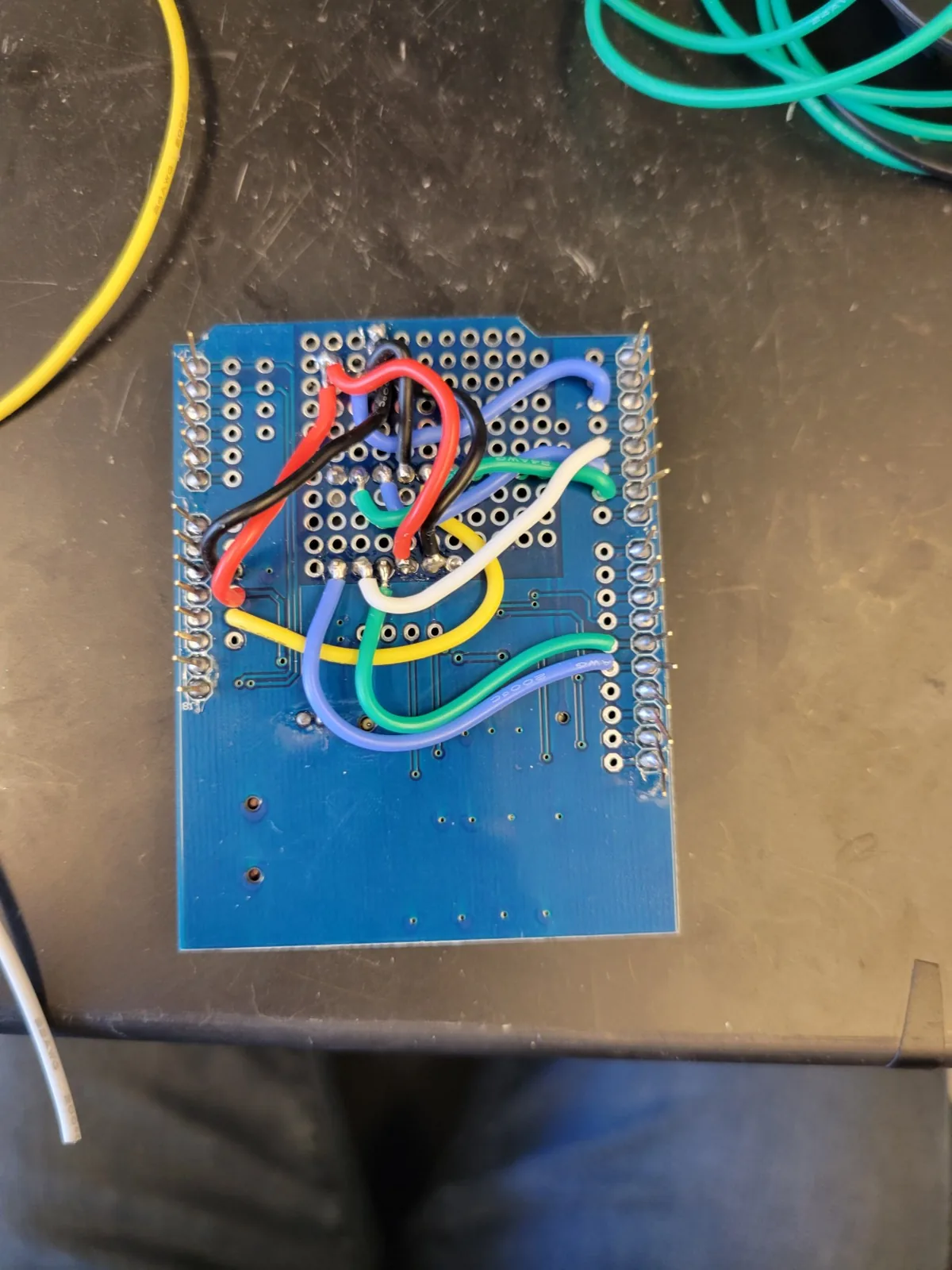
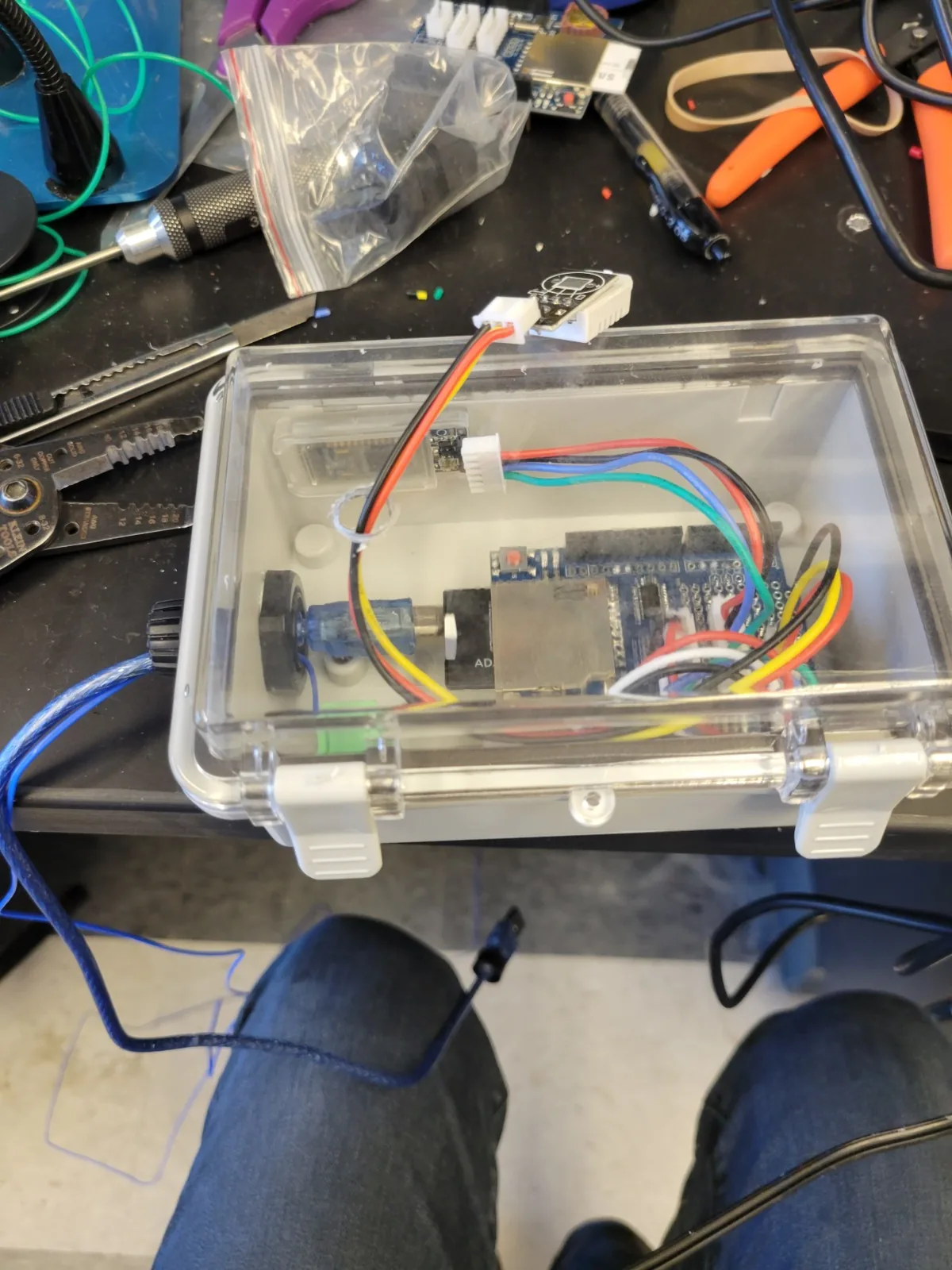
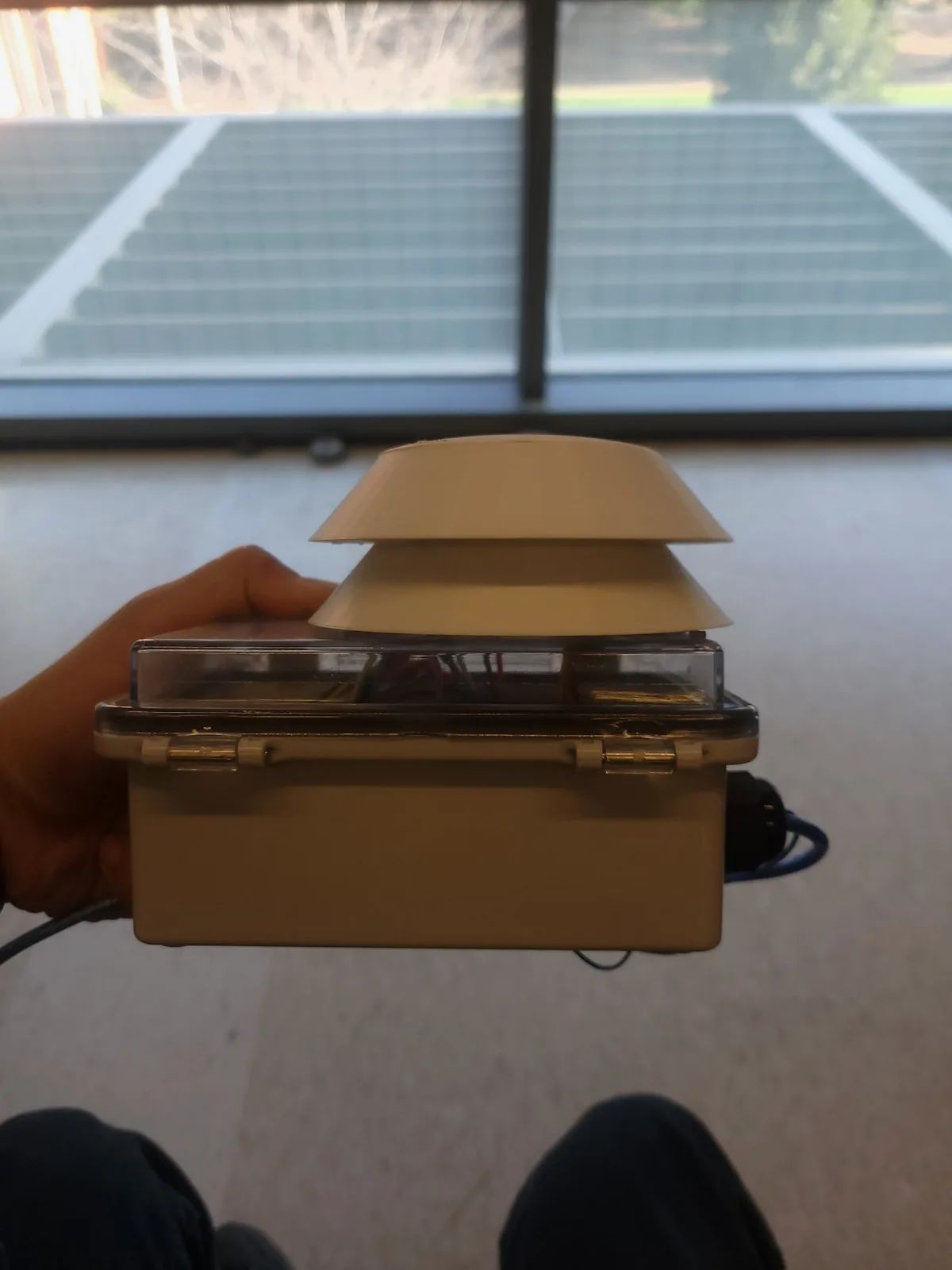
- Another board, hand-wired on perfboard.
- Two-level printed shield on top of the enclosure.
Test
- 4/23: V1–V3 on the ground. V4 held at 1.5 m.
- 4/25: V5–V6 with the six-level shield.
- CIMIS sensors sit 1.5 m above ground.
| Test | Setup | Time | Start (°C) | End (°C) | RH (%) | Note |
|---|---|---|---|---|---|---|
| V1 | 2-level shield, DHT22 on top | 2:00 pm | 21.0 | 23.0 | ~52 | steady, dipped to 49 |
| V2 | 2-level shield, DHT22 at bottom | 2:30 pm | 22.6 | 29.0 | 48 → 38 | never settled |
| V3 | 4-level shield, DHT22 on top | 3:00 pm | 20.8 | 24.5 | 53 → 49 | 19.9 °C / 58 % out of sun |
| V4 | 4-level shield at 1.5 m | 4:00 pm | 20.0 | 22.5 | 58 → 50 | slower drift |
| V5 | 6-level shield on ground | 1:30 pm | 21.0 | 25.0 | 57 → 50 | crept up in sun |
| V6 | 6-level shield in air | 2:00 pm | 21.6 | 22.5 | 59–60 | 20.9 °C in shade; 21.3 °C / 60.5 % after 2 min |
CIMIS at the same times:
| Time | Temp (°C) | RH (%) |
|---|---|---|
| 1:00 pm | 20.20 | 57 |
| 2:00 pm | 19.56 | 52 |
| 3:00 pm | 19.40 | 51 |
| 4:00 pm | 19.06 | 53 |
Observations
- On the ground the station reads ground temperature. V5 crept from 21 to 25 °C in five minutes. The same shield in air (V6) moved 21.6 → 22.5 °C.
- The shield works, but the drift is still larger than the sensor accuracy.
- The DHT22 board heats itself: +0.7 °C after two minutes off. A longer logging interval may reduce it.
- Both boards read the same DHT22. The second unit reads +0.5 °C.
- Best result: V6, 21.3 °C / 60.5 % after two minutes of cooldown, still above the CIMIS readings in the table (19.1–20.2 °C).
Next
- Mount the sensor at the top of the shield.
- Test heights. CIMIS uses 1.5 m.
- Test both stations at the same time.