Build Drones: Upgrading Airframes - DJI F550 vs Tarot 650
As detailed in Part 1, I initially started my custom drone builds with the DJI F550 because it was a verified platform I had used successfully in my previous remote sensing research. However, after realizing that the F550 could only safely yield around 10 to 15 minutes of flight time under my new payload requirements, I knew I needed to upgrade to a platform with higher efficiency, bigger propellers, and lower KV motors to handle longer tests and heavier sensors.
The first step was to compare the existing platform against my new goal: the Tarot 650 Sport.
Airframe Comparison: DJI F550 vs Tarot 650
The Limits of the F550
- Flight Time: Maxed out at roughly 15 minutes.
- Payload: The battery drained significantly under the weight of even simple payloads (like mobile phone mounts), which meant any further attachments like LiDAR or heavier cameras were simply not feasible. I considered testing with a mobile phone mount, but quickly found out the mount would need to be re-engineered, which didn’t solve the core power limitation issue.
Selecting the Tarot 650 Sport Platform
When evaluating a replacement for the F550, the Tarot 650 platform represented a fundamental architectural shift. While the F550 used six smaller motors (hexacopter), the Tarot 650 uses four much larger motors (quadcopter). By swinging massive 15-inch folding propellers instead of 9.4-inch rigid ones, the overall system efficiency drastically improves.
Additionally, I specifically chose the Sport version (TL65S01) over the older Iron Man series (TL65B01) because of several core upgrades:
- Motorized Retractable Landing Gear: This is a huge advantage. The landing skids automatically fold up during flight, keeping them completely out of the vertical field-of-view for heavy 360° cameras or rotating LiDAR sensors.
- Portability: Despite its large 650mm wheelbase, the carbon fiber arms and propellers fold down, making it surprisingly compact to transport.
- Canopy Support: It natively supports the sleek Tarot 680PRO canopy to protect the electronics.
- Operating Voltage: Designed around high-voltage 22.2V (6S) systems rather than the typical 4S.
Theoretical Specifications:
- Max Flight Time: ~40 mins (assuming a massive 22,000mAh structural battery, though 25-30 mins is perfectly achievable with a standard 10,000mAh 6S).
- Optimal Payload: 1130g (Max Payload 1500g, depending on battery weight).
- Max Yaw Velocity: 200°/s.
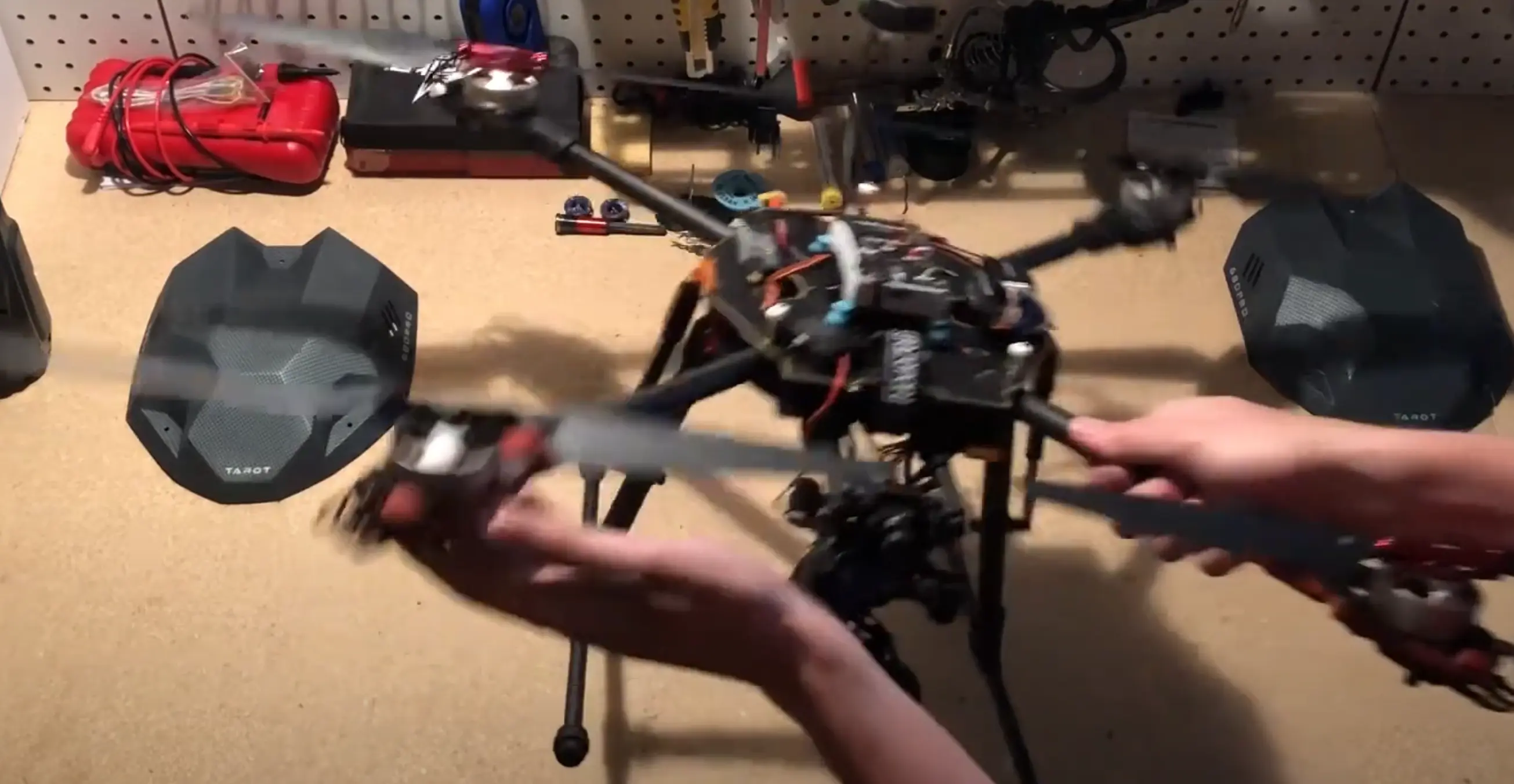
To help visualize how the electronic loadout and folding features come together, here is an excellent example community assembly highlighting the carbon fiber structure and 15-inch folding propellers:
Designing the Power System: 4S vs. 6S
One of the longest debates in custom builds is whether to use a 4S or 6S battery system.
- Higher voltages (6S) provide more RPM per KV while running at lower amperage, which means the motors don’t have to work as hard and wire gauges can remain standard.
- However, 4S systems can still run up to 30 minutes if paired with the right low KV motor (e.g. 500-600KV motors spinning 15” or 16” props).
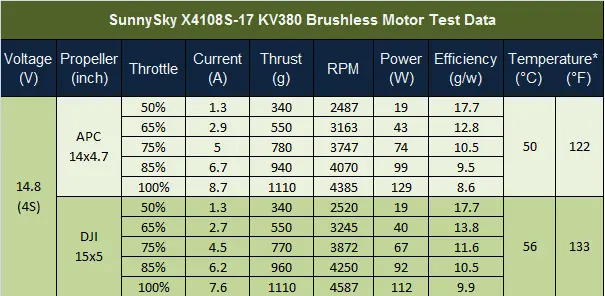
Given my requirement to carry a heavier payload and eventually fly for 25+ minutes, going with lower KV motors (under 400KV) and larger 15” to 17” propellers significantly improves efficiency (grams of thrust per watt).
Note from a community test: An AUW 2.8kg, 650 Iron Man frame, 400KV motors, 14” props, 8000mAh 6S setup achieved a mixed flight time of 20-22 minutes!
Next Steps
The frame decision is made: taking the flight controller and essentials off the F550 and migrating to the Tarot 650 Sport. The next step before buying parts is simulating motor efficiency and flight time using eCalc, which I will cover in the next post.